

Debt Restructuring and Personal Bankruptcy in Singapore: The Ultimate Guide
Facing mounting debt in Singapore can feel overwhelming, but understanding your legal options is the first step toward regaining financial stability. Whether you are considering debt restructuring, the Debt Repayment Scheme (DRS), or filing for personal bankruptcy, Singapore law provides structured pathways designed to protect both debtors and creditors. The Insolvency, Restructuring and Dissolution Act 2018 (IRDA) governs these processes and replaced the old Bankruptcy Act on 30 July 2020. This guide breaks down what you need to know so you can make informed decisions and move forward with confidence.
What Is Debt Restructuring in Singapore?
Debt restructuring is a process through which an individual or company renegotiates the terms of existing debts to achieve more manageable repayment conditions. It can involve reducing interest rates, extending payment timelines, or consolidating multiple debts into a single obligation.
For companies, company restructuring is an initiative to significantly change the company's finances, operations, and management to address financial losses. Under the IRDA, restrictions now apply to contractual clauses that previously allowed creditors to terminate agreements upon insolvency, preventing a cascading domino effect that could destroy a distressed company's value.
Personal vs Corporate Debt Restructuring
Personal debt restructuring typically involves negotiating directly with creditors through a lawyer or entering a court-supervised scheme. Corporate restructuring may involve schemes of arrangement, judicial management, or voluntary winding up. Both pathways aim to avoid the severe consequences of full bankruptcy.
Alternatives to Bankruptcy You Should Explore First
Before filing for bankruptcy, you should understand the alternatives available under Singapore law. These options can help you settle debts while preserving your assets and avoiding the restrictions that come with a bankruptcy order.
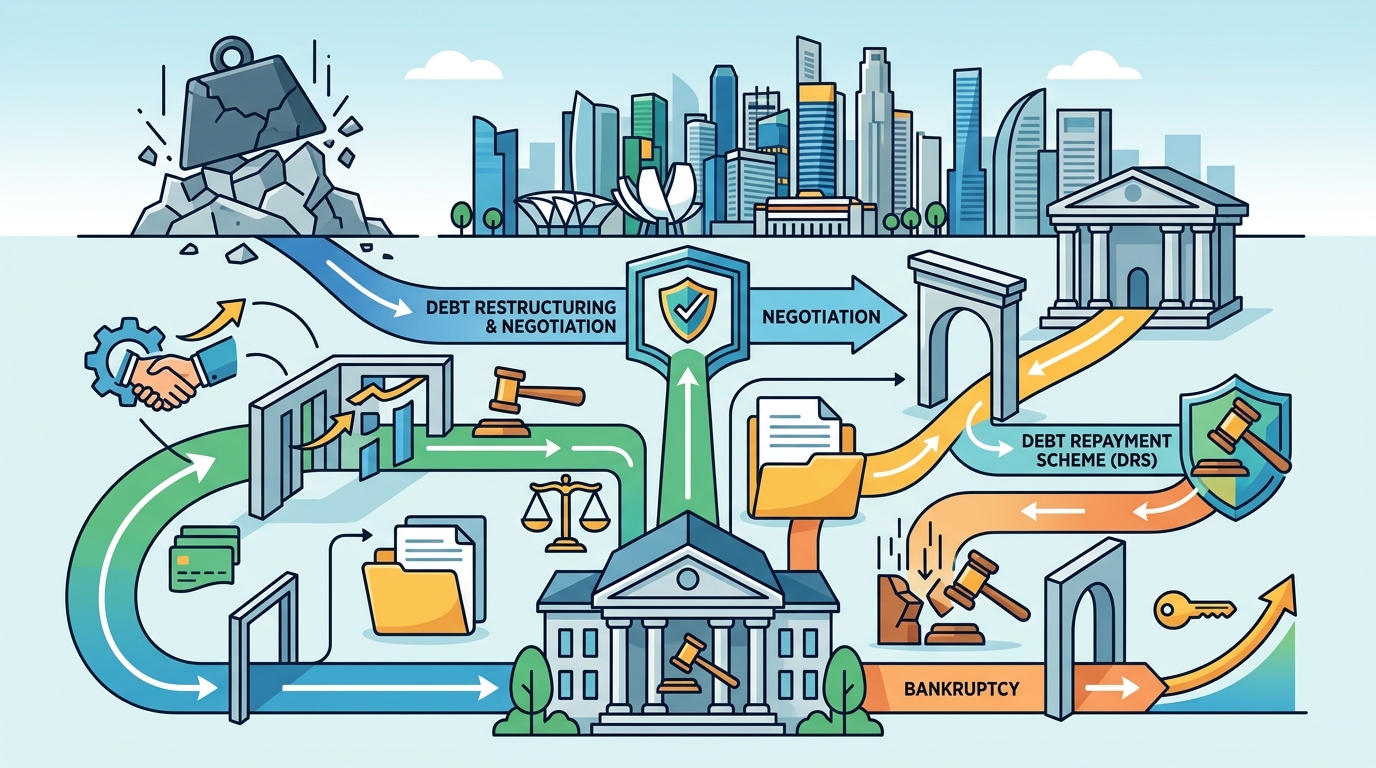
Debt Repayment Scheme (DRS)
The Debt Repayment Scheme is a court-supervised plan for debtors with unsecured debts under S$150,000 that allows repayment without a bankruptcy record. Under the DRS, the Official Assignee does not take over your property or liquidate assets. Instead, the OA monitors payments and ensures compliance with the repayment plan. Learn more in our detailed guide to the Debt Repayment Scheme in Singapore.
Voluntary Arrangements
A Voluntary Arrangement (VA) is a formal agreement between a debtor and creditors to repay debt under the supervision of a nominee. The key advantage of a VA over bankruptcy is that it does not impose the same restrictions, such as travel limitations or business management bars. You can apply for an interim order to suspend bankruptcy proceedings while proposing a VA to your creditors.
Debt Consolidation Plans
Debt consolidation involves combining unsecured debts into one manageable loan, often with a lower interest rate. This option is available through participating financial institutions and can be explored alongside negotiated payment plans with creditors.
| Option | Debt Limit | Court Supervised | Assets Protected | Public Record |
|---|---|---|---|---|
| Debt Repayment Scheme | Under S$150,000 | Yes | Yes | No bankruptcy record |
| Voluntary Arrangement | No fixed limit | Yes (interim order) | Yes | No bankruptcy record |
| Debt Consolidation Plan | Varies by lender | No | Yes | No bankruptcy record |
| Personal Bankruptcy | S$15,000 minimum | Yes | No (most assets vested in trustee) | Listed on bankruptcy register |
When Personal Bankruptcy Applies
Bankruptcy is a legal status declared by the High Court of Singapore when an individual is unable to repay debts amounting to S$15,000 or more. Either you or your creditors can file a bankruptcy application. The IRDA defines a bankrupt as an individual debtor who has been adjudged bankrupt by a bankruptcy order.
For a creditor to file against you, they must first issue a statutory demand, giving you 21 days to pay or make arrangements. If you fail to comply, the creditor may proceed with a bankruptcy application to the High Court.
The Bankruptcy Filing Process Step by Step
Whether filed by you or a creditor, the bankruptcy application follows a structured legal process governed by the IRDA.
Documents You Need to Prepare
A debtor filing voluntarily must complete a statement of affairs (covering assets, liabilities, monthly expenses, and employment status) along with an affidavit to verify the information. You must also obtain the written consent of a licensed insolvency practitioner to act as your trustee before filing.
Filing and Court Hearing
The applicant must pay a deposit of S$1,850 to the Official Assignee for estate administration. Documents are filed via eLitigation at the Supreme Court. A hearing date is then set, and attendance is mandatory. If the court is satisfied that the criteria are met, it will issue a bankruptcy order and appoint a trustee to manage your estate.
Role of the Official Assignee and Private Trustee
The Official Assignee (OA) is a public officer who oversees bankrupt estates, investigating the bankrupt's affairs and recovering assets for distribution to creditors. In many cases, a Private Trustee in Bankruptcy (PTIB) is appointed instead. The PTIB determines your monthly contribution and target contribution based on your income and expenses.
Consequences of Being Declared Bankrupt
Once a bankruptcy order is made, significant restrictions apply to your daily life and financial activities. Understanding these consequences is critical before deciding to file. Our guide on what happens if you are declared bankrupt covers these in detail.
Key restrictions include: you cannot leave Singapore without your trustee's approval; you are barred from managing a business or serving as a company director without court permission; and you must disclose your bankruptcy status when applying for credit exceeding S$1,000. Your name will appear on the Singapore bankruptcy register, which is searchable by the public for a fee.
On the positive side, once declared bankrupt, your debts are frozen and creditors cannot charge further interest or commence new legal action against you. The trustee puts a monthly repayment scheme in place, giving you a structured path forward.
How to Get Discharged From Bankruptcy
Bankruptcy in Singapore is not permanent. First-time bankrupts may typically be discharged within three to seven years. Under the IRDA, your trustee can issue a certificate discharging you from bankruptcy once you have met your target contribution.
If you pay your target contribution in full after three to five years and more than half of your creditors have no objection, you will be discharged. If creditors object, you can seek the court's approval. After five to seven years with the target met, the court can also grant your discharge. Read our comprehensive guide to bankruptcy discharge in Singapore for more details.
Key Takeaways
- The IRDA 2018 is the primary law governing personal bankruptcy and debt restructuring in Singapore, replacing the old Bankruptcy Act.
- The minimum debt threshold for filing bankruptcy is S$15,000, and the application is made to the High Court.
- Alternatives such as the Debt Repayment Scheme, Voluntary Arrangements, and debt consolidation plans should be explored before resorting to bankruptcy.
- A deposit of S$1,850 and the consent of a licensed insolvency practitioner are required to file a bankruptcy application.
- Bankrupts face restrictions on travel, business management, and credit but benefit from frozen debts and a structured repayment plan.
- First-time bankrupts can typically be discharged in three to seven years after meeting their target contribution.
- Seeking legal advice early keeps costs down and opens up more options for debt resolution.
Frequently Asked Questions
What is the minimum debt required to file for bankruptcy in Singapore?
You must owe at least S$15,000 in debts that are immediately payable and enforceable in Singapore. This threshold applies whether you file voluntarily or a creditor files against you.
What is the Debt Repayment Scheme (DRS)?
The Debt Repayment Scheme is a court-supervised alternative to bankruptcy for debtors with unsecured debts under S$150,000. It allows you to repay debts while retaining your property and avoiding a bankruptcy record on the public register.
How long does bankruptcy last in Singapore?
For first-time bankrupts, discharge is typically possible within three to five years if you meet your target contribution and a majority of creditors do not object. In other cases, it may extend to five to seven years or longer.
Can I travel overseas while bankrupt?
No. You cannot leave Singapore without the prior approval of your Official Assignee or Private Trustee in Bankruptcy. Unapproved travel can result in further penalties.
Will my HDB flat be taken if I go bankrupt?
Your HDB flat is a protected asset under Singapore law if at least one flat owner is a Singapore citizen. It cannot be included in the bankruptcy estate or sold to pay creditors.
What happens to my debts once I am declared bankrupt?
Your debts are frozen upon the bankruptcy order. Creditors can no longer charge interest or commence new legal action against you. A trustee manages your estate and distributes repayments to creditors in an orderly manner.
Can I run a business while bankrupt?
You cannot manage a business or act as a company director without the permission of your trustee or the High Court. You must also disclose your bankruptcy status to any business partners.
How much does it cost to file for bankruptcy?
You must pay a deposit of S$1,850 to the Official Assignee. Additional costs include legal fees for preparing documents and court filings. Consulting a lawyer early can help you understand the full cost and whether alternatives might be more cost-effective.
Get Professional Legal Help Today
Navigating debt restructuring and bankruptcy proceedings in Singapore requires experienced legal guidance. IRB Law LLP has over a decade of focused experience in insolvency and debt restructuring, with a team led by Managing Partner Mohamed Baiross who brings over three decades of expertise in corporate and commercial law. Contact IRB Law's bankruptcy and insolvency team today for a confidential consultation and take the first step toward resolving your financial difficulties.