

Common Mistakes in Uncontested Divorce Filings in Singapore and How to Avoid Them
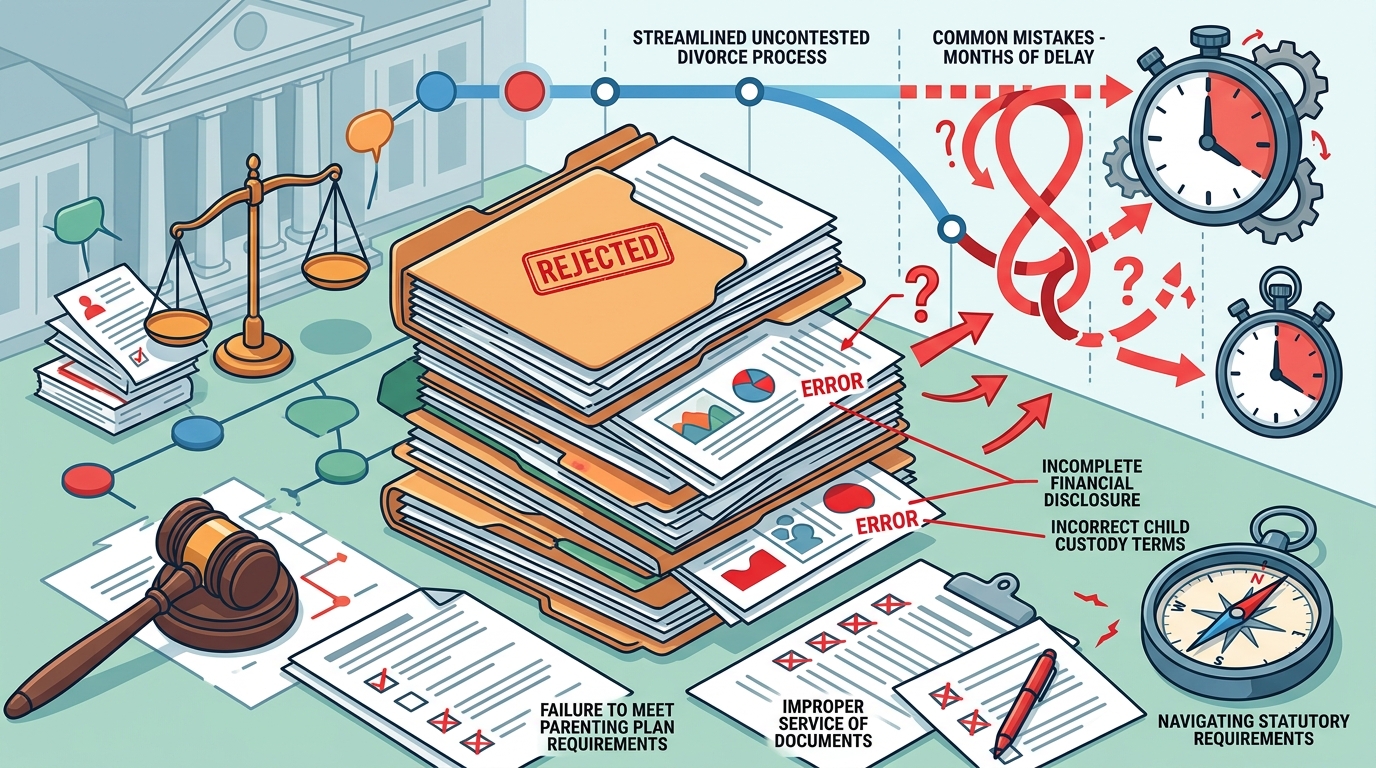
Divorce is rarely a simple administrative task, even when both parties agree to part ways. In Singapore, the legal framework for marriage dissolution is rigorous, designed to ensure fairness and protect the interests of all parties involved. According to recent legal insights, navigating the path from marriage to divorce requires precise adherence to statutory requirements. A single error in documentation or timing can delay the process by months or even years, turning a supposedly "uncontested" matter into a contentious and expensive legal battle. This guide outlines the most frequent errors made by individuals filing for divorce in Singapore and provides actionable strategies to avoid them. (Cross Border Money Transfers)
Understanding Uncontested Divorce in Singapore
An uncontested divorce occurs when both spouses agree on the decision to divorce and all ancillary matters, including child custody, maintenance, and asset division. While this sounds straightforward, the Singapore legal system demands strict compliance with the Women's Charter. The term "uncontested" refers to the lack of dispute, not the absence of legal procedure. Even in amicable splits, the court must be satisfied that the marriage has irretrievably broken down. This is established by proving one of five facts, such as adultery, unreasonable behavior, desertion, or separation. Failing to correctly identify and prove the chosen ground is the most common initial error.
Legal experts emphasize that trust is built case by case, and relationship by relationship. IRB Law LLP operates on the principle that legal expertise must meet unwavering advocacy to ensure your rights are protected throughout this transition. Understanding the foundational requirements of an uncontested filing is the first step toward a smooth process.
Mistake 1: Incorrect Grounds for Divorce
The most critical error in any divorce filing is selecting the wrong ground for divorce. Under Singapore law, you must prove one of five specific facts to establish that the marriage has irretrievably broken down. Choosing the wrong ground can lead to immediate rejection of your application or force you to restart the entire process.
Adultery vs. Unreasonable Behavior
Many individuals mistakenly cite adultery when they should cite unreasonable behavior, or vice versa. Adultery requires proof of sexual intercourse with a third party. If you lack concrete evidence, such as admission or photographic proof, this ground can be difficult to sustain. Unreasonable behavior is broader and covers a wider range of conduct that makes it intolerable to live with the spouse. It is often the safer choice when evidence of adultery is scarce.
Desertion and Separation
Desertion requires proving that your spouse has left you without your consent and without reasonable cause for at least two years. Separation grounds require living apart for three or four years. A common mistake is filing for separation before the full period has elapsed. The clock starts from the date of actual separation, not the date of disagreement. Misjudging this timeline is a frequent cause of procedural delays.
Mistake 2: Misunderstanding Separation Periods
Separation is a complex legal concept in Singapore. It is not merely about sleeping in different rooms or having separate bank accounts. The law requires that the parties live "separately" in a manner that demonstrates the end of the marital relationship. A common mistake is assuming that physical separation within the same HDB flat or condominium counts as legal separation.
To be considered separated while living under the same roof, you must prove that you have ceased to function as a married couple. This includes eating separately, not engaging in sexual relations, and maintaining independent social lives. Courts scrutinize these claims heavily. If you cannot provide sufficient evidence of this "separation under one roof," your application may be dismissed. It is crucial to document this period clearly and seek legal advice on how to substantiate your claim.
Mistake 3: Overlooking Child Custody Arrangements
Even in an uncontested divorce, the welfare of the children is the court's paramount concern. A significant mistake is failing to reach a comprehensive agreement on child custody, care, and control before filing. The court will not grant a divorce if there are unresolved issues regarding the children unless the parents have submitted a detailed proposal.
Care and Control vs. Access
Many parents confuse "care and control" with "access." Care and control refers to the parent with whom the child primarily resides. Access refers to the time the other parent spends with the child. Failing to specify these arrangements clearly can lead to future disputes. You must also address education, medical decisions, and holiday arrangements. An ambiguous agreement here can result in the court ordering a custody hearing, which defeats the purpose of an uncontested divorce.
Maintenance Calculations
Another oversight is miscalculating child maintenance. Singapore courts use specific guidelines to determine appropriate maintenance amounts. These guidelines consider the needs of the child, the income of both parents, and the standard of living enjoyed before the separation. Underestimating these costs can lead to financial strain later. It is advisable to use official calculators or consult with experienced divorce lawyers to ensure the proposed amount is fair and enforceable.
Mistake 4: Incomplete Asset and Liability Disclosure
Full and frank disclosure of all matrimonial assets is a legal requirement in Singapore. A common and dangerous mistake is hiding assets, such as offshore accounts, crypto holdings, or properties in other jurisdictions. The court has the power to investigate financial disclosures, and concealment can lead to severe penalties, including the reversal of asset division orders years later.
Defining Matrimonial Assets
Not all assets acquired during the marriage are automatically considered matrimonial assets. Pre-marital assets may be excluded, but their contribution to the marriage must be evaluated. Conversely, assets acquired after separation may still be included if they are derived from matrimonial efforts. Misclassifying these assets can lead to an unfair division. It is essential to create a comprehensive list of all properties, bank accounts, investments, and debts.
Debts and Liabilities
Often, couples focus on assets and neglect liabilities. Joint debts, such as mortgages, car loans, and credit card debts, must be clearly allocated. Failing to address these can leave one party liable for debts they did not incur. Ensure that all financial obligations are explicitly stated in the divorce agreement to prevent future financial entanglements.
Mistake 5: Attempting DIY Filings Without Legal Review
While it is possible to file for divorce without a lawyer, the complexity of Singapore's legal system makes DIY filings risky. The forms are technical, and the procedural requirements are strict. A minor error in filling out the Form A (Originating Summons) or Form 12 (Affidavit for Divorce) can lead to rejection by the court registry.
The Cost of Errors
Many individuals believe that hiring a lawyer is too expensive. However, the cost of correcting errors, attending additional court hearings, or dealing with post-divorce disputes often far exceeds the initial legal fees. Legal professionals ensure that your documents are correctly drafted, filed, and served. They also help negotiate ancillary matters, ensuring that your agreement is robust and enforceable.
Specialized Legal Support
Different law firms specialize in different areas. For divorce, it is crucial to work with a firm that has extensive experience in family law. IRB Law LLP, for instance, is recognized as a top law firm in Singapore for its dedicated family law services. Their approach focuses on trust, integrity, and transparency, ensuring that clients receive personalized attention. Seeking professional guidance can save time, money, and emotional stress.
Key Takeaways
- Grounds Matter: Ensure you prove one of the five specific grounds for divorce under the Women's Charter. Incorrect grounds lead to dismissal.
- Separation Proof: If living apart under the same roof, document the cessation of marital duties clearly to prove legal separation.
- Child Welfare: Reach a detailed agreement on custody, care, and maintenance before filing to avoid court intervention.
- Full Disclosure: Disclose all assets and liabilities, including hidden or offshore holdings, to avoid future legal penalties.
- Professional Help: DIY filings carry high risks. Consult with legal experts to ensure accuracy and efficiency.
- Timeliness: Adhere strictly to separation periods (3 or 4 years) before filing on those grounds.
- Documentation: Keep records of all financial transactions and communications related to the separation.
Frequently Asked Questions
What is the difference between contested and uncontested divorce in Singapore?
An uncontested divorce means both parties agree on the divorce and all ancillary matters, such as child custody and asset division. A contested divorce involves disputes over one or more of these issues, requiring court intervention to resolve them.
How long does an uncontested divorce take in Singapore?
The process typically takes between 4 to 6 months from filing to the Final Judgment of Divorce, provided all documents are in order and there are no complications. The timeline can vary based on court schedules and the complexity of ancillary matters.
Can I file for divorce if my spouse lives overseas?
Yes, you can file for divorce in Singapore if you are domiciled in Singapore or have been habitually resident in Singapore for at least three years immediately preceding the filing. Your spouse's location does not necessarily prevent you from filing, but serving them with documents may require additional legal steps.
What happens if we disagree on child custody after filing?
If you disagree on child custody after filing, the divorce may no longer be considered uncontested. The court will require a custody hearing to determine the best interests of the child. It is highly advisable to resolve these matters before filing to maintain the uncontested status.
Do I need a lawyer for an uncontested divorce?
While not legally required, it is highly recommended. A lawyer ensures that your documents are correctly prepared, filed, and that your rights are protected. They can also help negotiate fair terms for ancillary matters, preventing future disputes.
What are the costs involved in an uncontested divorce?
Costs include court filing fees, lawyer's fees (if applicable), and mediation fees (if used). Court filing fees are relatively low, but legal fees can vary based on the complexity of the case and the lawyer's experience. It is best to obtain a detailed quote from your legal representative.
Can I change my mind after filing for divorce?
Yes, you can withdraw your divorce application at any time before the Final Judgment is granted. However, if you wish to remarry or start a new relationship, you must wait until the divorce is finalized. Withdrawing the application may also have implications for any interim orders made.
Contact IRB Law LLP
Navigating the complexities of divorce requires precision, empathy, and expert legal guidance. At IRB Law LLP, we understand that every case is unique. Our team of dedicated family lawyers is committed to providing you with the support you need during this challenging time. We offer a range of services, including divorce representation, child custody mediation, and asset division advice.
Do not let common mistakes derail your future. Contact us today to schedule a consultation. We are available to assist you with your legal needs promptly and professionally. You can reach us via phone at +65 6298 2537, WhatsApp at +65 9614 5747, or email at hello@irblaw.com.sg. Visit our office at 60 Albert Street, Singapore, or book an appointment online to discuss your case.