

When a loved one passes away in Singapore, the immediate administrative burden often falls on the surviving family members. One of the most critical steps in settling the estate is obtaining the correct legal authority to manage the deceased's assets. This authority comes in two primary forms: a Grant of Probate and Letters of Administration. Understanding the distinction between these two legal instruments is not merely a formality; it is the foundational step that determines whether your family can access bank accounts, sell property, or distribute inheritance. According to recent legal trends, the complexity of estate administration has increased, making professional guidance essential for navigating the Singapore legal landscape effectively.
What is a Grant of Probate?
A Grant of Probate is a legal document issued by the High Court of Singapore. It confirms the validity of the deceased person's Will and appoints the executors named in that Will to administer the estate. The core function of this grant is to provide the executors with the legal authority to collect the deceased's assets, pay off any outstanding debts, and distribute the remaining estate to the beneficiaries.
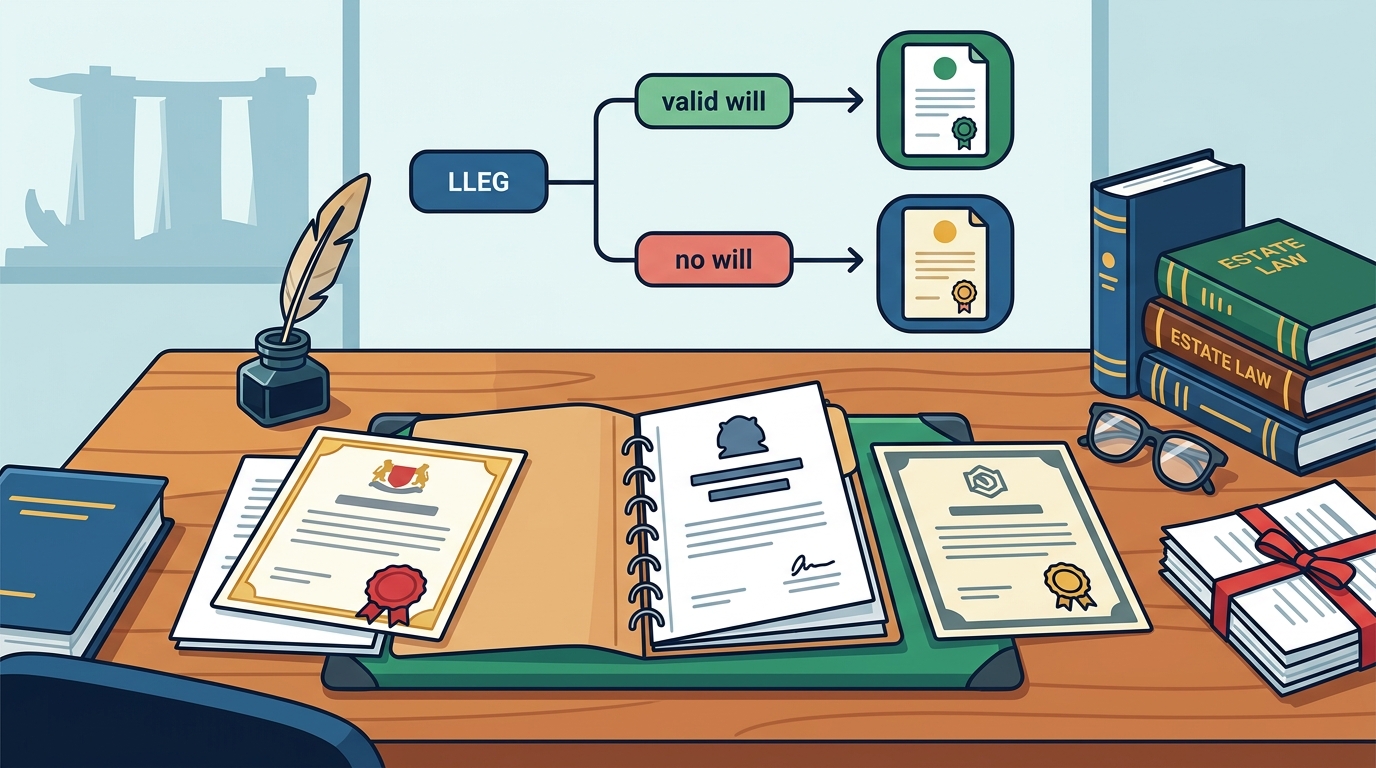
Probate is only applicable when the deceased left a valid and legally binding Will. The Will must clearly identify the executors who are willing and able to take on this responsibility. If the Will does not name an executor, or if the named executor is unable or unwilling to act, the court may appoint an administrator instead, which shifts the process toward Letters of Administration.
For families dealing with the loss of a loved one, the presence of a Will often provides a clear roadmap. However, the legal weight of the Grant of Probate ensures that third parties, such as banks and land registries, recognize the executor's authority. Without this document, financial institutions will typically refuse to release funds or transfer property titles, regardless of what the Will states.
What are Letters of Administration?
Letters of Administration serve a similar purpose to Probate but are issued when the deceased died intestate, meaning they did not leave a valid Will. In this scenario, the court appoints an administrator to manage the estate. The administrator is usually a close relative of the deceased, such as a spouse, child, or parent, who applies for this legal authority.
Intestacy in Singapore is governed by the Intestate Succession Act. This Act provides a strict formula for how the estate should be distributed among the surviving family members. Unlike a Will, which allows the deceased to choose their beneficiaries, intestacy laws dictate the distribution based on familial relationships. For example, if the deceased is survived by a spouse and children, the estate is divided according to specific percentages outlined in the law.
It is crucial to understand that Letters of Administration are not merely a formality. They establish the legal hierarchy of who has the right to manage the estate. The court must be satisfied that the applicant is suitable and has the necessary standing to act as the administrator. This process ensures that the estate is handled fairly and in accordance with statutory requirements.
Key Differences Between the Two
While both grants provide the legal authority to administer an estate, the underlying circumstances and the parties involved differ significantly. The primary distinction lies in the existence of a Will. Probate is tied to the Will and the executors it names. Letters of Administration are tied to the intestacy laws and the relatives who apply for the role.
Another critical difference is the scope of discretion. Executors with a Grant of Probate have the discretion to distribute assets according to the deceased's wishes, provided those wishes are legal. Administrators with Letters of Administration have no such discretion; they must follow the Intestate Succession Act precisely. This lack of flexibility can sometimes lead to disputes among family members who feel the statutory distribution is unfair.
| Feature | Grant of Probate | Letters of Administration |
|---|---|---|
| Trigger Condition | Valid Will exists | No valid Will (Intestacy) |
| Appointed Party | Executor(s) named in Will | Administrator (usually close relative) |
| Governing Law | Wills Act | Intestate Succession Act |
| Distribution Discretion | Follows the Will | Follows statutory formula |
| Primary Purpose | Validate Will and appoint Executor | Appoint Administrator for intestate estate |
When to Apply for Each
Determining which grant to apply for depends entirely on the status of the deceased's Will. If a Will exists, you must apply for a Grant of Probate. The executors named in the Will are responsible for initiating this process. If the Will is lost, destroyed, or deemed invalid, the estate is treated as intestate, and the surviving family members must apply for Letters of Administration.
It is also important to consider the value and type of assets. In Singapore, if the total value of the deceased's assets is below a certain threshold, or if the assets are held in a way that bypasses the estate (such as joint tenancy or designated beneficiaries in insurance policies), a grant may not be necessary. However, for significant assets like HDB flats or private property, a grant is almost always required to effect the transfer of ownership.
For families navigating these decisions, understanding the specific requirements for each grant is vital. The process can be time-consuming and legally complex. Engaging with a firm that specializes in probate and estate planning can help clarify which path is appropriate for your specific situation.
The Application Process in Singapore
The application process for both grants is handled through the Singapore Courts. It involves filing a petition, providing detailed inventories of the estate, and paying the requisite court fees. The process is rigorous and requires precise documentation to avoid delays or rejections.
For a Grant of Probate, the petition must include the original Will and any codicils. The court will review the Will to ensure it meets the formal requirements of execution. If the Will is contested, the process can become a civil litigation matter, further complicating the administration.
For Letters of Administration, the applicant must demonstrate their relationship to the deceased and their entitlement to administer the estate. The court may require affidavits from other family members to confirm there are no objections to the application. This step is crucial for preventing future disputes and ensuring the administrator has the full support of the family.
Once the grant is issued, the executor or administrator must then deal with the various asset holders. This includes banks, investment firms, and property developers. Each institution will require a certified copy of the grant before they will release assets. This can take several months, depending on the complexity of the estate and the responsiveness of the institutions involved.
Common Challenges in Estate Administration
Estate administration in Singapore is fraught with potential pitfalls. One of the most common challenges is the discovery of unknown assets or debts. If the deceased had undisclosed bank accounts or loans, the executor or administrator must locate and settle these before distribution. Failure to do so can lead to personal liability for the administrator.
Another significant challenge is family disputes. Disagreements over the interpretation of a Will or the fairness of the intestacy distribution can stall the entire process. In such cases, the matter may need to be resolved through litigation and dispute resolution services. These disputes can be emotionally draining and financially costly for all parties involved.
Tax implications are also a growing concern. While Singapore does not have an inheritance tax, there may be other tax considerations, such as capital gains tax on property sales or stamp duty on property transfers. Understanding these financial obligations is essential for accurate estate planning and administration.
For more insights on legal matters affecting families, you can visit the Legal Information Centre Singapore, which provides accessible resources for understanding your legal rights.
Key Takeaways
- Grant of Probate is required when a valid Will exists, validating the Will and appointing the named executors.
- Letters of Administration are required when the deceased dies intestate, appointing an administrator based on the Intestate Succession Act.
- Legal Authority is mandatory for accessing most significant assets, including bank accounts and real estate, in Singapore.
- Intestacy Laws dictate distribution when no Will exists, removing the deceased's control over their estate.
- Professional Guidance is highly recommended to navigate the complex court procedures and avoid personal liability.
- Dispute Resolution may be necessary if family members disagree on the administration or distribution of the estate.
- Timely Action is crucial to prevent asset depreciation and ensure the smooth settlement of the deceased's affairs.
Frequently Asked Questions
What is the difference between a Grant of Probate and Letters of Administration?
A Grant of Probate is issued when the deceased left a valid Will, confirming the executors named in it. Letters of Administration are issued when there is no valid Will, appointing an administrator to handle the estate according to intestacy laws.
Who can apply for Letters of Administration in Singapore?
Close relatives of the deceased, such as the spouse, children, or parents, can apply. The court prioritizes applicants based on their relationship to the deceased and their suitability to administer the estate.
How long does it take to obtain a Grant of Probate?
The process typically takes several months, depending on the complexity of the estate, the presence of any disputes, and the efficiency of the court. Simple estates may be processed faster, while contested cases can take much longer.
Do I need a lawyer to apply for a grant?
While it is possible to apply without a lawyer, the process is legally complex and requires precise documentation. Engaging a lawyer in Singapore can help ensure the application is correct and reduce the risk of delays or errors.
What happens if there is no Will and no family?
If the deceased has no Will and no surviving family members, the estate may escheat to the Government of Singapore. The Attorney-General's Chambers typically acts as the administrator in such cases.
Can a Will be contested after a Grant of Probate is issued?
Yes, a Will can be contested even after a grant is issued, but it is difficult. Grounds for contesting include lack of testamentary capacity, undue influence, or fraud. Such disputes often require civil litigation to resolve.
What is the role of the Supreme Court of Singapore in this process?
The Supreme Court of Singapore issues the grants of probate and letters of administration. It oversees the legal validity of the Will or the eligibility of the administrator, ensuring the estate is handled according to the law.
Contact IRB Law LLP
Navigating the complexities of estate administration requires expertise, precision, and compassion. At IRB Law LLP, we understand that dealing with legal matters during a time of loss is incredibly challenging. Our team of dedicated lawyers specializes in probate, estate planning, and dispute resolution, providing you with the support you need to settle the estate efficiently and fairly.
Whether you need to apply for a Grant of Probate, seek Letters of Administration, or resolve a family dispute, we are here to help. We offer personalized legal advice tailored to your specific circumstances. Contact us today to schedule a consultation and take the first step toward resolving your estate matters with confidence.
Click here to contact IRB Law LLP and speak with one of our experienced lawyers.