

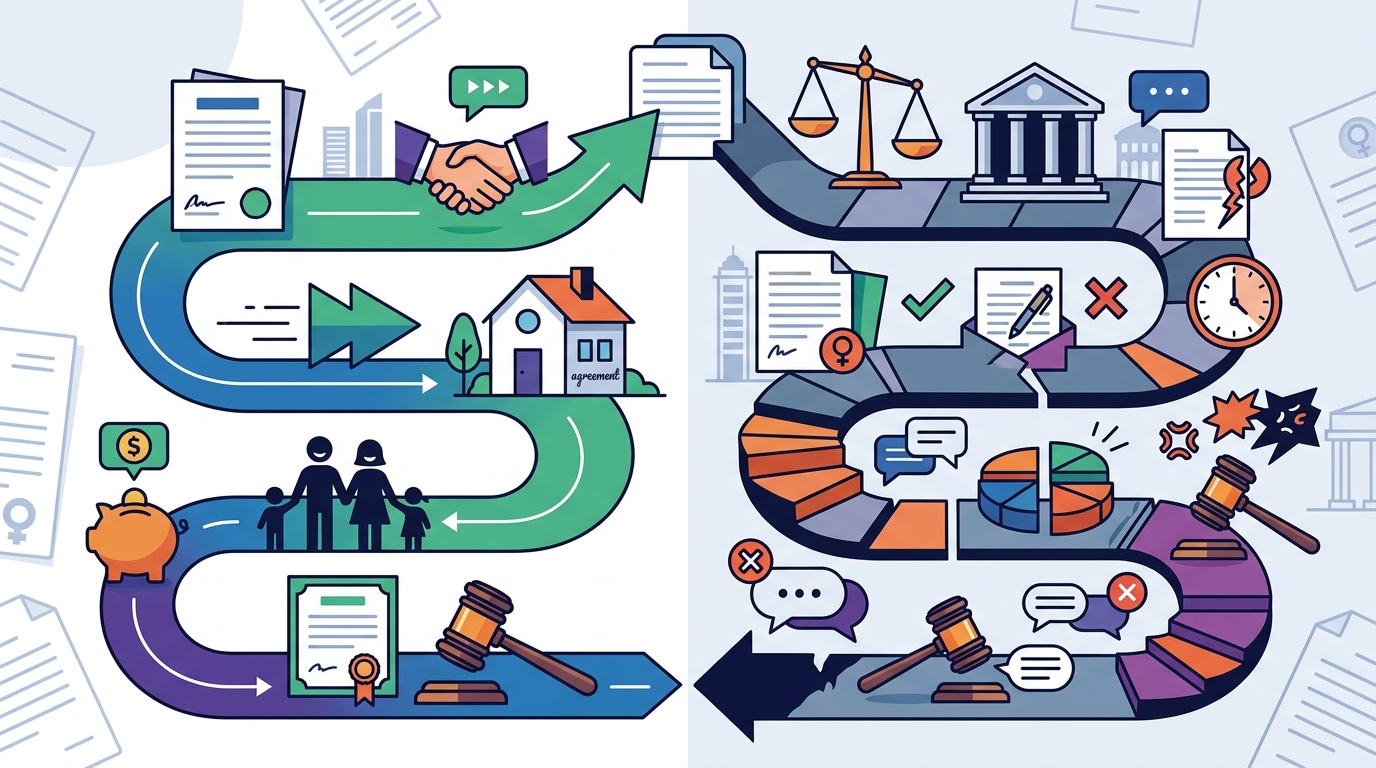
Divorce in Singapore is a complex legal procedure governed by the Women's Charter. The path you take depends entirely on whether you and your spouse can agree on the terms. Uncontested divorces are faster and cheaper, while contested divorces involve court battles over assets and custody. Understanding the difference is critical for protecting your financial future and emotional well-being.
Grounding Facts and Legal Framework
Before filing for divorce, you must meet strict eligibility criteria. Under Singapore law, you must have been married for at least three years. There are limited exceptions for severe hardship or depravity. Divorce is the legal dissolution of a marriage.
The grounds for divorce are singular: the marriage has broken down irretrievably. You must prove one of five facts to establish this. These include adultery, unreasonable behavior, desertion, separation for two years with consent, or separation for four years. According to recent legal trends, the majority of divorces in Singapore are now filed on the grounds of separation, reflecting a shift toward less adversarial proceedings. IRB Law LLP specializes in navigating these complex statutory requirements for clients across Singapore.
The Uncontested Divorce Process
An uncontested divorce occurs when both parties agree on the decision to divorce and all ancillary matters. Ancillary matters include child custody, maintenance, and the division of matrimonial assets. This is the most efficient route for ending a marriage.
Step 1: Filing the Writ of Divorce
The process begins with the filing of a Writ of Divorce and Statement of Particulars. This document outlines the grounds for divorce and the proposed arrangements for children and assets. If you are representing yourself, you can file at the Family Justice Courts. However, legal representation is highly recommended to ensure accuracy. Our team of lawyers can draft these documents to prevent procedural delays.
Step 2: Notice of Preparation and Interlocutory Judgment
Once filed, you must serve the documents on your spouse. If they agree, they file a Notice of Preparation. The court then schedules a hearing for the Interlocutory Judgment. This judgment confirms that the court is satisfied with the grounds for divorce. It does not yet dissolve the marriage. You must wait three months after this judgment before applying for the Final Judgment.
Step 3: Final Judgment and Ancillary Matters
If ancillary matters are agreed upon, they are often handled via a Consent Order. This order is legally binding and enforceable. The court reviews the agreement to ensure it is fair and, if children are involved, in their best interests. Once approved, you apply for the Final Judgment of Divorce. This legally ends your marriage. IRB Law's Family Law team ensures that Consent Orders are robust and prevent future disputes.
The Contested Divorce Process
A contested divorce arises when one party disagrees with the divorce itself or cannot reach an agreement on ancillary matters. This path is longer, more expensive, and emotionally draining. It involves formal litigation and court interventions.
Step 1: Dispute and Defense
If your spouse contests the divorce, they file a Defense. This document challenges the grounds or the facts presented in your Writ. The case then moves from a simple administrative process to a litigious one. Contested divorce is a legal process where parties cannot agree on terms. You must engage legal counsel to represent your interests aggressively.
Step 2: Case Management and Interim Applications
The court holds Case Management Conferences to identify the issues in dispute. You may need to file Interim Applications for urgent matters, such as protection orders or temporary maintenance. These applications require evidence and legal arguments. The court may order mediation to try and resolve issues before trial. Our Litigation & Dispute Resolution experts are skilled in navigating these complex procedural hurdles.
Step 3: Trial and Judgment
If mediation fails, the case proceeds to trial. Both parties present evidence, call witnesses, and make legal submissions. The judge decides on the divorce grounds and all ancillary matters. This process can take several years. The outcome is binding and enforceable by law. Civil Litigation specialists at IRB Law LLP provide strategic advocacy to protect your rights during this critical phase.
Key Differences: A Comparative Overview
Understanding the practical differences between these two paths is essential for strategic planning. The table below summarizes the core distinctions.
| Feature | Uncontested Divorce | Contested Divorce |
|---|---|---|
| Agreement Status | Both parties agree on all terms. | Disagreement on divorce or ancillary matters. |
| Timeline | 6 to 12 months typically. | 1 to 3+ years, depending on complexity. |
| Cost | Lower legal fees and court costs. | Significantly higher due to litigation hours. |
| Control | Parties control the outcome via agreement. | Judge decides the outcome after trial. |
| Emotional Impact | Less adversarial and stressful. | Highly adversarial and emotionally taxing. |
The choice between these paths depends on your specific circumstances. If you can negotiate fairly, an uncontested route is preferable. If there is significant conflict, professional legal intervention is necessary. IRB Law's Insights provide further guidance on navigating these decisions.
Key Takeaways
- Three-Year Rule: You must be married for at least three years before filing for divorce in Singapore.
- Irretrievable Breakdown: This is the sole ground for divorce, proven by one of five specific facts.
- Interlocutory Judgment: This is the first court order confirming the divorce grounds, not the final dissolution.
- Three-Month Wait: You must wait three months after the Interlocutory Judgment to apply for the Final Judgment.
- Consent Orders: In uncontested divorces, these legally bind both parties to agreed terms on assets and custody.
- Mediation First: Courts often require mediation before allowing contested cases to proceed to trial.
- Legal Representation: Complex asset division or custody disputes require specialized legal expertise.
Frequently Asked Questions
How long does an uncontested divorce take in Singapore?
An uncontested divorce typically takes between 6 to 12 months from filing to the Final Judgment, assuming no delays in serving documents or court schedules.
Can I file for divorce before three years of marriage?
Generally, no. You must be married for at least three years. Exceptions exist only for severe hardship or depravity, which require court permission.
What happens if my spouse refuses to agree to the divorce?
If your spouse refuses, the divorce becomes contested. You must prove one of the five grounds for divorce in court, which involves litigation and higher costs.
Do I need a lawyer for an uncontested divorce?
While not mandatory, it is highly advisable. A lawyer ensures documents are correctly filed and that your interests are protected in the Consent Order.
How are matrimonial assets divided in Singapore?
Assets are divided based on fairness and the contributions of both parties. The court considers direct financial contributions and indirect non-financial contributions.
What is the role of the Interlocutory Judgment?
The Interlocutory Judgment confirms the court is satisfied with the divorce grounds. It does not end the marriage but allows the process to move to the final stage.
Can child custody be decided during the divorce?
Yes, child custody and maintenance can be decided concurrently with the divorce. The court prioritizes the best interests of the child in all decisions.
Contact IRB Law LLP
Navigating divorce requires precision and strategic foresight. Whether your case is straightforward or complex, IRB Law LLP provides the expertise you need. We offer personalized legal solutions tailored to your unique situation. Contact us today to schedule a consultation with our experienced family law team. We are here to support you through every step of the process.