

Estate planning remains a critical financial responsibility for modern households. Recent regulatory data shows that over sixty percent of Singaporean families lack formal succession documents. Official statistics indicate this gap frequently triggers costly court interventions during probate proceedings. Understanding the precise legal requirements for drafting a valid Will or Lasting Power of Attorney prevents administrative delays. You must follow strict statutory guidelines to ensure your directives remain enforceable. Consulting a qualified legal practitioner guarantees compliance with current Singaporean statutes. (Cross Border Money Transfers)
Understanding Core Legal Instruments
Defining the Will
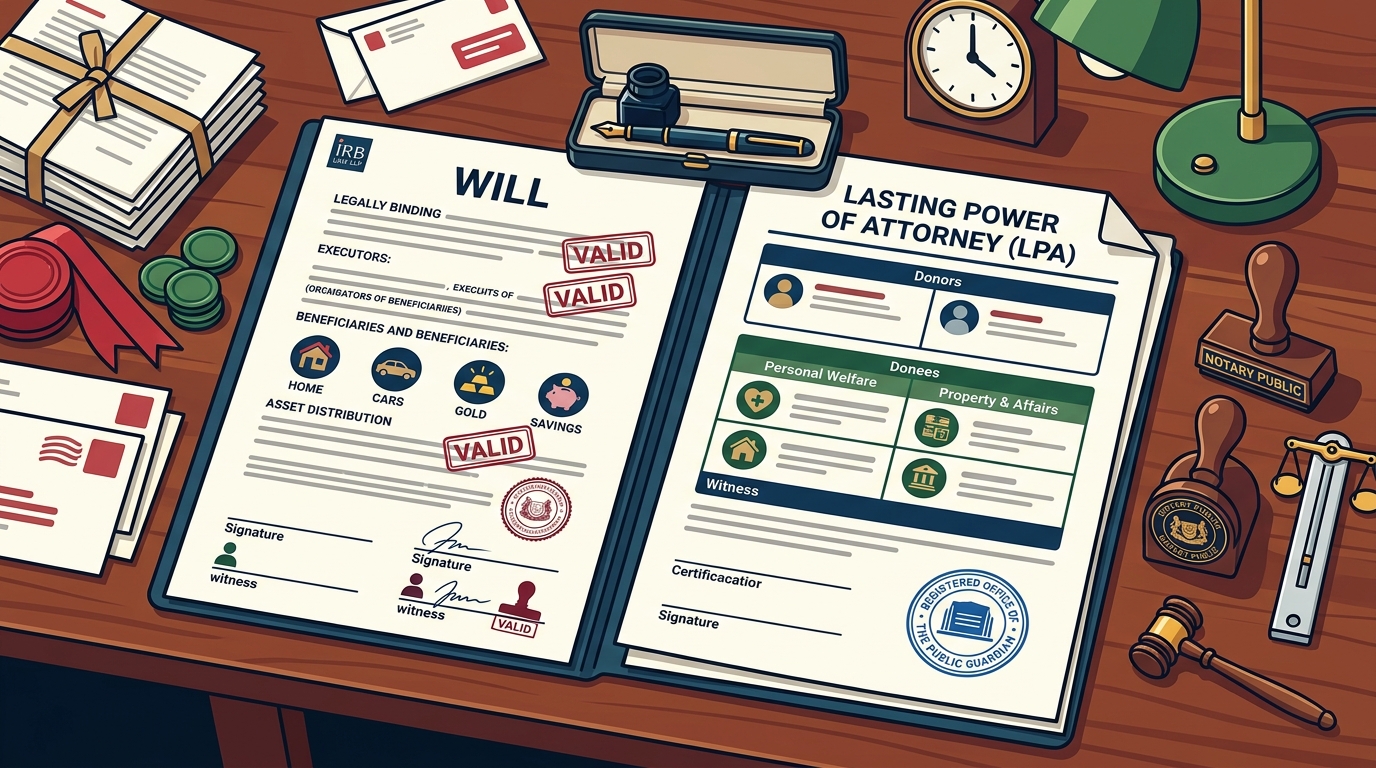
A Will is a formal legal document that dictates how your assets will be distributed after your death. This instrument allows you to appoint executors and specify guardians for minor children. Without a properly executed Will, your estate falls under the Intestate Succession Act. This statutory framework often contradicts your personal wishes regarding asset allocation. (Join Us IRB Law)
Defining the Lasting Power of Attorney
A Lasting Power of Attorney is a legal authorization that grants a trusted individual the authority to manage your financial and healthcare decisions. This instrument activates only when you lose mental capacity. The Mental Capacity Act 2008 governs all LPA registrations in Singapore. Government regulations require both an attorney and a certificate provider to validate the arrangement.
Preparation and Documentation Phase
Before initiating the drafting process, you must compile a comprehensive inventory of your assets. This inventory should include property titles, bank account statements, investment portfolios, and insurance policies. You also need to identify potential beneficiaries and determine their respective shares. Clear documentation prevents ambiguity during the probate stage.
Selecting Your Representatives
Choosing the right executors or attorneys requires careful consideration. You should prioritize individuals with strong organizational skills and financial literacy. Family members often serve as executors, but professional fiduciaries provide objective oversight. Your chosen representatives must be at least twenty-one years old and mentally competent.
The Formal Drafting Process
Drafting requires precise legal terminology to avoid future litigation. You must clearly state your identity, revoke all prior wills, and appoint your executors. The document must explicitly outline your distribution preferences for specific assets. Ambiguous language frequently leads to court challenges and prolonged estate administration.
Incorporating Protective Clauses
You should include specific clauses addressing digital assets, overseas properties, and contingent beneficiaries. These provisions ensure comprehensive coverage across all jurisdictions. Your legal counsel will verify that each clause aligns with current Singaporean case law. Proper structuring minimizes the risk of invalidation during probate.
Execution and Witnessing Requirements
Execution follows strict statutory protocols to guarantee legal validity. You must sign the document in the physical presence of two independent witnesses. These witnesses cannot be beneficiaries or spouses of beneficiaries. Their signatures must appear immediately after your signature.
Verifying Witness Competency
Witnesses must be mentally competent adults who understand the nature of the document. They must observe you signing the instrument without coercion or undue influence. Any deviation from these witnessing rules renders the entire document void. Proper execution prevents costly court interventions later.
Maintenance and Periodic Updates
Legal instruments require regular review to remain effective. You should update your documents after major life events such as marriage, divorce, or the birth of children. Financial changes or property acquisitions also necessitate formal amendments. Stale documents frequently cause administrative delays during probate proceedings.
Managing LPA Revocation and Updates
You retain the absolute right to revoke or amend your Lasting Power of Attorney at any time. This process requires formal written notice to your appointed attorneys. You must also register the updated instrument with the Office of the Public Guardian. Public Guardian guidelines mandate complete documentation to avoid unnecessary delays.
When to Engage Professional Assistance
Complex estates often require specialized legal expertise to navigate regulatory requirements. You should consult a qualified solicitor when dealing with cross-border assets or business succession. Professional guidance ensures compliance with the Wills Act 1939 and the Mental Capacity Act 2008. Legal frameworks dictate strict compliance with current statutory amendments. Expert oversight prevents costly drafting errors and future litigation.
Evaluating Service Tiers
Legal service providers typically offer tiered engagement models based on estate complexity. Basic packages cover standard residential properties and straightforward bank accounts. Premium services address business interests, overseas holdings, and intricate family structures. Selecting the appropriate tier ensures comprehensive coverage without unnecessary expenses.
Service Comparison and Pricing Tiers
| Service Category | Target Client Profile | Key Deliverables | Estimated Processing Time |
|---|---|---|---|
| Standard Will Drafting | Individuals with residential property and basic bank accounts | Customized Will document, executor appointment, basic asset distribution | 7 to 10 business days |
| Complex Estate Planning | Business owners with cross-border holdings and multiple beneficiaries | Comprehensive Will, trust structures, tax optimization strategies | 14 to 21 business days |
| LPA Registration Support | Seniors requiring financial and healthcare decision delegation | Office of the Public Guardian registration, certificate provider coordination | 10 to 14 business days |
| Full Estate Administration | Families navigating probate without a valid Will | Letters of Administration, asset liquidation, creditor settlement | 3 to 6 months |
Key Takeaways
- A properly executed Will must be signed by the testator and two independent witnesses to remain valid.
- Lasting Power of Attorney registration requires approval from the Office of the Public Guardian before activation.
- Beneficiaries and their spouses are legally disqualified from serving as witnesses during execution.
- Regular document reviews should occur after marriage, divorce, or significant asset acquisitions.
- Professional legal oversight significantly reduces the probability of court challenges during probate.
- Complex estates involving business interests or overseas properties require specialized trust structuring.
- IRB Law LLP provides comprehensive estate planning services tailored to Singaporean regulatory standards.
Frequently Asked Questions
Can I draft a legally binding Will without a lawyer?
Yes, you can draft a Will independently, but strict statutory requirements must be met. The document requires your signature and two independent witnesses. Any deviation from these rules frequently results in invalidation. Professional drafting ensures compliance with current Singaporean statutes.
What happens if I do not create a Lasting Power of Attorney?
Without an LPA, your family must apply for Deputyship through the State Courts. This process involves lengthy court hearings and substantial legal fees. Deputyship grants limited authority compared to a properly executed LPA. Proactive planning avoids unnecessary administrative delays.
How long does the LPA registration process take?
The Office of the Public Guardian typically processes applications within ten to fourteen business days. Processing times may extend during peak periods or if documentation contains errors. You should submit complete forms to avoid unnecessary delays. IRB Law LLP streamlines this registration process for clients.
Can I change my Will after signing it?
You may revoke or amend your Will at any time while mentally competent. You must execute a formal codicil or draft an entirely new document. All prior versions must be explicitly revoked to prevent confusion. Proper documentation ensures your latest wishes remain legally enforceable.
What documents are required to register an LPA?
You must submit the prescribed Office of the Public Guardian forms along with identity verification. A certificate provider must verify your mental capacity and free will. Your attorneys must also sign the application to acknowledge their acceptance. Complete documentation accelerates the registration timeline significantly.
Are digital assets covered under a standard Singaporean Will?
Standard templates often overlook digital accounts, cryptocurrencies, and online subscriptions. You should explicitly list digital assets to ensure seamless access for your executors. Modern estate planning frameworks now include comprehensive digital inventory schedules. Clear directives prevent administrative bottlenecks during probate.
Secure Your Legacy With Expert Legal Guidance
Proper estate planning requires precision, regulatory compliance, and strategic foresight. Our experienced legal team specializes in drafting customized Wills and Lasting Power of Attorney documents. We guide you through every procedural step to guarantee legal validity. Contact IRB Law LLP today to schedule your confidential consultation. Visit our Contact Us page to begin protecting your assets. Explore our comprehensive Estate Planning services for detailed pricing and service tiers. Our dedicated Legal Team stands ready to assist with complex cross-border estates. Secure your family future with professional oversight today.