

Drafting a Binding Will or Lasting Power of Attorney in Singapore: Step-by-Step Guide
Establishing legal safeguards for your assets and personal welfare is a critical responsibility for every Singaporean. Recent data indicates that financial scams in Singapore have resulted in losses of nearly $3.88 billion between 2020 and September 2025, highlighting the urgent need for robust financial and legal planning. Banking fraud statistics show that without proper authorization frameworks, vulnerable individuals are at significant risk of exploitation. This guide outlines the precise steps to draft a legally binding Will or Lasting Power of Attorney (LPA) to protect your legacy and ensure your wishes are honored.
Understand the Difference Between a Will and an LPA
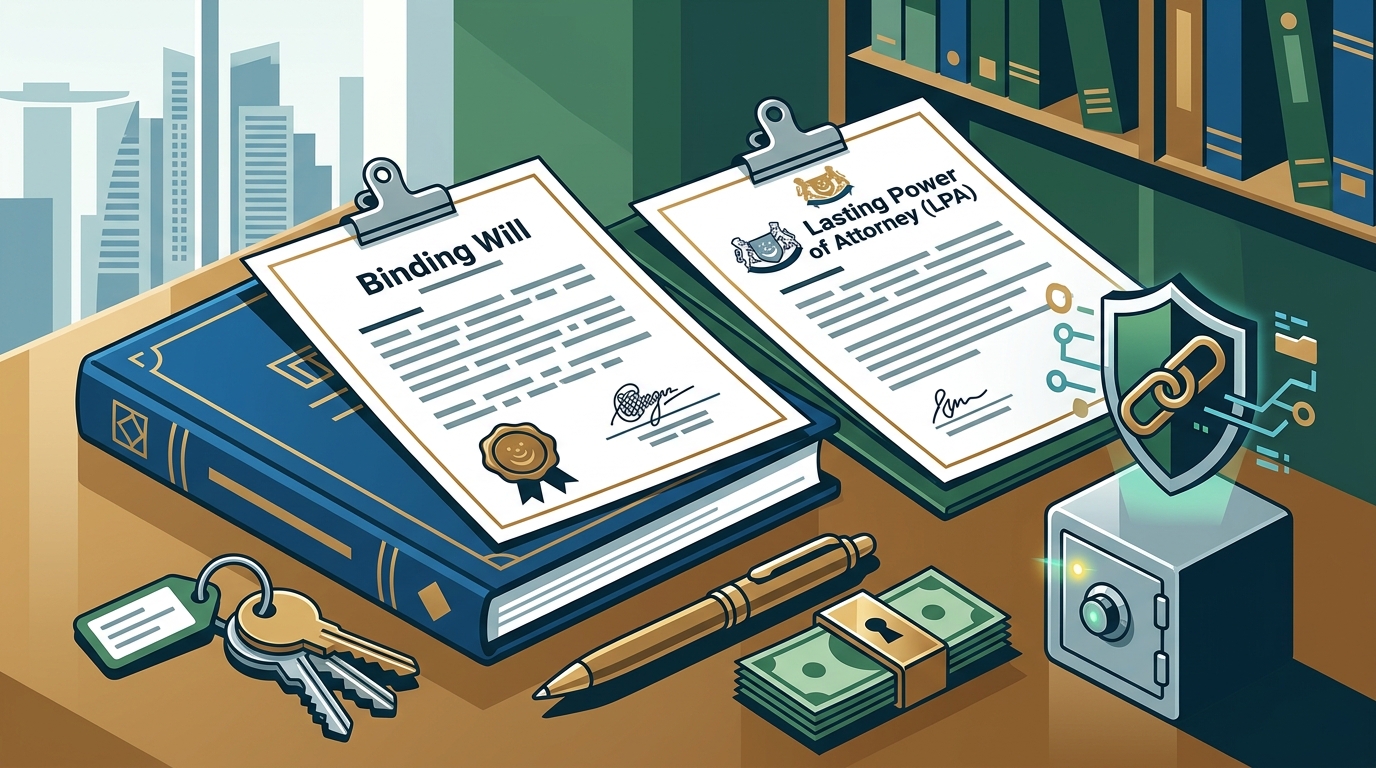
Before drafting any documents, it is essential to distinguish between the two primary estate planning tools available in Singapore. A Will is a legal document that dictates how your assets are distributed after your death. It only comes into effect upon your demise. In contrast, a Lasting Power of Attorney (LPA) allows you to appoint trusted individuals to make decisions on your behalf if you lose mental capacity. Estate planning experts emphasize that an LPA is proactive, whereas a Will is reactive.
Understanding this distinction prevents costly legal ambiguities. Without an LPA, your family may need to apply for a Court of Protection order to manage your affairs, a process that is both time-consuming and expensive. Conversely, a Will ensures that your specific wishes regarding asset distribution are legally recognized, preventing intestacy laws from dictating the outcome.
Step 1: Choose Your Executors and Donees
The first critical step in both processes is selecting the right people to manage your affairs. For a Will, you must appoint an executor. This person will administer your estate, pay off debts, and distribute assets according to your instructions. For an LPA, you must appoint donees. These are the individuals authorized to make financial and/or personal welfare decisions for you.
When selecting these individuals, prioritize trust, competence, and willingness to serve. It is common to appoint multiple executors or donees to share the burden. However, ensure they can work together harmoniously. If you are unsure who to choose, consider appointing a professional corporate trustee or a law firm to act as an executor. Professional guidance can help you navigate the complexities of selecting the right representatives for your specific family dynamics.
Step 2: Draft the Will
Drafting a Will requires precision to ensure it is legally binding. The process involves several key components that must be clearly articulated.
Define Your Assets and Beneficiaries
Begin by creating a comprehensive inventory of your assets. This includes real estate, bank accounts, investments, and personal belongings. Clearly identify your beneficiaries, specifying who receives what. Ambiguity in this section can lead to disputes and legal challenges later.
Appoint Guardians for Minor Children
If you have minor children, your Will is the only legal document that allows you to appoint guardians. This is a crucial decision that determines who will care for your children if both parents pass away. Ensure your chosen guardians are willing and able to take on this responsibility.
Include Specific Clauses
Your Will should include standard clauses such as the revocation of previous Wills, the appointment of executors, and the distribution of residual estate. You may also include specific bequests, such as charitable donations or gifts to specific individuals. Legal frameworks in Singapore require that the Will clearly states the testator's intent to avoid interpretation issues.
Step 3: Execute the Will Properly
Drafting the document is only half the battle. Execution is the formal process that makes the Will legally valid. In Singapore, the execution of a Will must adhere to strict formalities under the Wills Act.
Sign in the Presence of Witnesses
You must sign your Will in the presence of two witnesses. Both witnesses must be present at the same time. They must then sign the Will in your presence and in the presence of each other. It is critical that the witnesses are not beneficiaries in the Will. If a beneficiary witnesses the Will, they may lose their inheritance.
Avoid Common Execution Errors
Common errors include witnesses signing before the testator, or the testator not signing in the presence of both witnesses. These mistakes can render the Will invalid. To ensure compliance, many individuals choose to have their Will drafted and executed with the assistance of a lawyer. Legal professionals ensure that all statutory requirements are met, providing peace of mind that your Will will be upheld.
Step 4: Complete the LPA Process
The process for creating an LPA is more structured and regulated than that of a Will. It involves specific forms and mandatory certification.
Fill Out the LPA Forms
You must complete the prescribed LPA forms provided by the Office of the Public Guardian (OPG). There are two main parts to the LPA: Part A covers financial and property affairs, while Part B covers personal welfare decisions. You can choose to include both or just one part, depending on your needs.
Appoint Certifying Practitioners
Unlike a Will, an LPA requires the appointment of a certifying practitioner. This is a registered medical practitioner or a psychologist who certifies that you have the mental capacity to make the LPA and are not acting under undue influence. This step is crucial for validating your decision-making capacity at the time of creation.
Consult with Your Donees
You must have a consultation with your donees before completing the LPA. This ensures they understand their responsibilities and are willing to act on your behalf. Counseling resources are available to help families navigate these difficult conversations and ensure everyone is aligned.
Step 5: Registration and Secure Storage
Once your documents are drafted and executed, the final steps involve registration and storage.
Register the LPA
An LPA must be registered with the OPG to be effective. You can register it immediately after execution, or you can choose to register it later when you anticipate losing mental capacity. Registration involves paying a fee and submitting the necessary documents. Estate planning services can assist with the registration process to ensure it is completed correctly and efficiently.
Store Your Will Securely
Your Will does not need to be registered, but it must be stored securely. You can keep it with your lawyer, in a bank safe deposit box, or with a trusted family member. Inform your executor of the Will's location. If the Will is lost or destroyed, it may be presumed revoked, which could lead to intestacy.
Key Takeaways
- Proactive Planning: An LPA is essential for managing your affairs during incapacity, while a Will handles asset distribution after death.
- Strict Execution: Wills must be signed in the presence of two non-beneficiary witnesses to be valid.
- Mandatory Certification: LPAs require certification by a medical practitioner or psychologist to confirm mental capacity.
- Registration Required: LPAs must be registered with the Office of the Public Guardian to take effect.
- Professional Guidance: Engaging a law firm ensures compliance with Singapore's legal requirements and reduces the risk of errors.
- Regular Reviews: Update your Will and LPA regularly to reflect changes in your life, assets, and relationships.
- Family Communication: Discuss your plans with your family and chosen representatives to prevent future disputes.
Frequently Asked Questions
Can I draft a Will or LPA myself without a lawyer?
Yes, you can draft a Will yourself using standard templates, but it carries the risk of errors that could invalidate it. For an LPA, while you can fill out the forms yourself, the process requires specific certifications and registration that are complex to navigate alone. Professional assistance is highly recommended to ensure legal validity.
How much does it cost to draft a Will in Singapore?
The cost of drafting a Will varies depending on the complexity of your estate and the law firm you choose. Simple Wills may cost a few hundred dollars, while more complex estates with trusts or business interests can cost significantly more. Legal service fees should be discussed during your initial consultation.
What happens if I die without a Will in Singapore?
If you die without a Will, your assets will be distributed according to the Intestate Succession Act. This means the government dictates who inherits your assets, which may not align with your wishes. Your family may also face delays and additional costs in administering your estate.
Can I change my LPA after it is registered?
Yes, you can revoke or amend your LPA as long as you have the mental capacity to do so. You must follow specific procedures to revoke an LPA, including notifying the OPG and your donees. It is important to update your LPA regularly to reflect any changes in your relationships or circumstances.
Who can be a donee for my LPA?
You can appoint any individual aged 21 or above who has the mental capacity to act as a donee. This can include family members, friends, or even professional corporate trustees. You can appoint up to four donees, who can act jointly or jointly and severally, depending on your preference.
Is an LPA only for the elderly?
No, an LPA is not only for the elderly. It is beneficial for anyone who wants to ensure their affairs are managed according to their wishes in the event of unexpected incapacity. Younger individuals can also benefit from having an LPA in place, especially if they have dependents or significant assets.
How long does it take to register an LPA?
The registration process for an LPA typically takes several weeks, depending on the completeness of the application and the workload of the OPG. Ensuring all forms are correctly filled out and all required documents are submitted can help expedite the process.
Contact IRB Law LLP
Navigating the complexities of estate planning and legal documentation requires expertise and precision. IRB Law LLP is a leading Singapore law firm dedicated to providing trusted legal services across family, estate planning, and corporate matters. Our team of experienced lawyers is here to assist you with drafting your Will, completing your LPA, and ensuring your legal affairs are in order.
Do not wait until it is too late. Take control of your future today. Contact IRB Law LLP to schedule a consultation and discuss your legal needs. We offer personalized advice and comprehensive support to help you achieve peace of mind.