

When a loved one passes away in Singapore, the first critical step for the family is securing the legal authority to manage the deceased’s estate. This authority comes in the form of either a Grant of Probate or Letters of Administration. The choice between these two legal instruments depends entirely on whether the deceased left a valid will. According to recent legal data, the complexity of estate administration in Singapore has increased, with many families facing delays due to incorrect initial applications. Understanding the distinction between these grants is essential for ensuring your loved one’s assets are distributed according to their wishes or, in their absence, according to the law. (Cross Border Money Transfers)
What is a Grant of Probate?
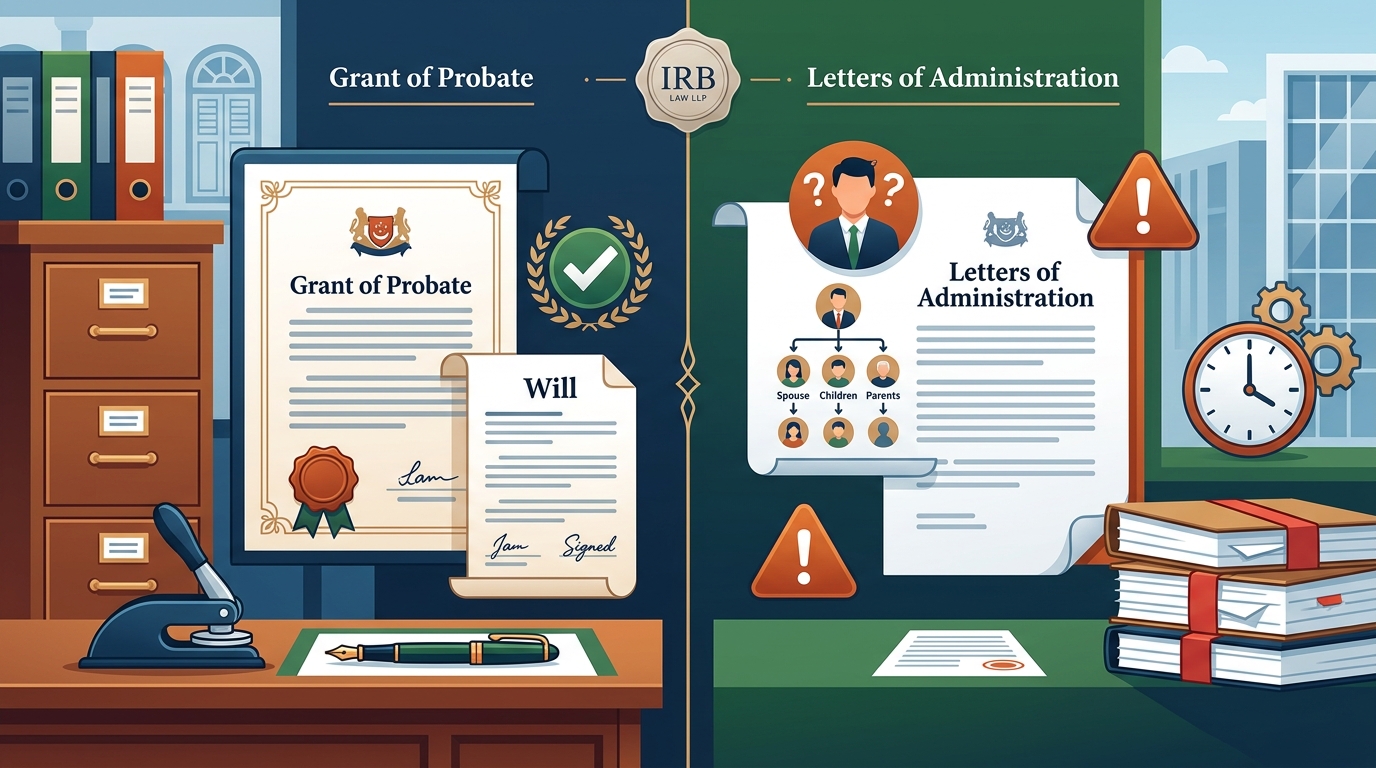
A Grant of Probate is the legal document issued by the High Court of Singapore that confirms the validity of a deceased person’s will. It also appoints the executors named in the will as the official administrators of the estate. Grant of Probate is the legal confirmation that a will is valid and that the named executors have the authority to act.
When a person dies leaving a valid will, they have exercised their right to choose who will manage their affairs. These chosen individuals are called executors. However, financial institutions and government agencies in Singapore will not release assets such as bank accounts, property, or shares to the executors without this court order. The Grant of Probate serves as the key that unlocks these assets.
The process begins with the executors filing an application in the State Courts or High Court, depending on the estate's value and complexity. If the estate is straightforward and below a certain threshold, the process can be simplified. However, for complex estates involving multiple properties or business interests, the application is more rigorous. IRB Law LLP provides specialized support in Probate & Letters of Administration Services in Singapore to ensure this process is handled with precision and speed.
What are Letters of Administration?
Letters of Administration are issued by the court when a person dies without a valid will, or when the will does not appoint any executors, or when the named executors are unable or unwilling to act. In this scenario, the court appoints an administrator, usually a close family member, to manage the estate. Letters of Administration is the legal authority granted to an administrator when there is no valid will.
When there is no will, the estate is distributed according to the Intestate Succession Act. This law dictates a strict hierarchy of beneficiaries, typically starting with the spouse and children, then parents, siblings, and so on. The administrator’s role is to gather the assets, pay off any debts, and distribute the remaining estate to the rightful beneficiaries as defined by law.
This process can be emotionally taxing and legally complex. The administrator must identify the correct beneficiaries and obtain their consent. If there are disputes among family members regarding who should be the administrator, the court must intervene. Our team at IRB Law LLP assists families in navigating these sensitive dynamics through our Estate Planning services, ensuring that the legal framework is respected while minimizing family conflict.
Key Differences Between the Two
While both instruments serve the same ultimate purpose of managing a deceased person’s estate, their origins and implications differ significantly. The primary difference lies in the existence of a will.
| Feature | Grant of Probate | Letters of Administration |
|---|---|---|
| Trigger Condition | Valid will exists with named executors. | No valid will, or no executors named. |
| Appointed Person | Executor (chosen by the deceased). | Administrator (chosen by the court/family). |
| Distribution Basis | According to the Will. | According to the Intestate Succession Act. |
| Beneficiary Consent | Not required for the grant itself. | Required from all eligible beneficiaries. |
| Legal Complexity | Generally simpler if will is clear. | Often more complex due to family dynamics. |
Another critical distinction is the requirement for beneficiary consent. For Letters of Administration, the applicant must obtain consent from all other eligible beneficiaries who have equal or greater priority to apply. This can lead to significant delays if family members disagree. In contrast, a Grant of Probate does not require such consent, as the deceased’s wishes are already documented.
Eligibility and Who Can Apply
Understanding who is eligible to apply is crucial for initiating the correct legal process. The rules differ based on the type of grant and the relationship of the applicant to the deceased.
For Grant of Probate
The executors named in the will are the primary applicants. If there are multiple executors, they can apply jointly or individually. If an executor declines to act, the remaining executors can apply. If no executors are willing or able to act, the beneficiaries named in the will may apply for Letters of Administration with the Will Annexed, which is a hybrid process.
For Letters of Administration
The court follows a strict order of priority for appointing an administrator. Typically, the surviving spouse or civil partner has the highest priority. If there is no spouse, the children of the deceased come next. If there are no children, the parents may apply. If there are no immediate family members, siblings or other relatives may be considered.
It is important to note that the court has discretion in appointing an administrator. If multiple people of the same priority class apply, the court may consider their relationship to the deceased and their ability to manage the estate effectively. IRB Law LLP offers Will Writing services to help you appoint trusted executors, reducing the likelihood of future disputes.
The Application Process in Singapore
The application process for both grants involves several steps, including filing an affidavit, paying court fees, and obtaining a grant. The timeline can vary from a few weeks for simple estates to several months for complex cases.
First, the applicant must prepare a Statement of Assets and Liabilities. This document details all assets and debts of the deceased. Accuracy is paramount, as any misrepresentation can lead to legal consequences. Next, the applicant files an Originating Summons in the State Courts. If the estate value exceeds a certain threshold or involves complex legal issues, the matter may be heard in the High Court.
Once the application is filed, the court will review the documents. If everything is in order, the court will issue a Certificate of Probate or a Certificate of Administration. This is followed by the formal grant. During this time, the applicant should also notify relevant institutions such as banks, CPF Board, and insurance companies.
For those seeking professional guidance, IRB Law LLP provides comprehensive support through our Insights section and direct consultation services. We help clients navigate the Legal Information Centre Singapore resources effectively.
Syariah Law Considerations
For Muslim citizens in Singapore, the process is governed by Syariah Law rather than the Intestate Succession Act. If a Muslim dies without a will, their estate is distributed according to Faraid, the Islamic inheritance law. In such cases, the family must apply for Letters of Administration from the Syariah Court, not the State Courts.
Similarly, if a Muslim leaves a will, it must be approved by the Syariah Court. The will cannot override the Faraid distribution unless specific conditions are met, such as donating to charity up to one-third of the estate. Our firm provides specialized Syariah Law services, including assistance with Wasiat & Hibbah – Muslim Wills and Faraid – Muslim Inheritance matters.
It is crucial for Muslim families to understand that the civil courts do not have jurisdiction over the distribution of assets for Muslims. Therefore, applying for the wrong type of grant can lead to significant legal complications and delays. Consulting with a lawyer who understands both civil and Syariah law is essential.
Key Takeaways
- Grant of Probate is required when a valid will exists and named executors are acting.
- Letters of Administration are required when there is no valid will or no executors named.
- The Intestate Succession Act dictates asset distribution for non-Muslims without a will.
- Faraid governs asset distribution for Muslims without a will.
- Beneficiary consent is required for Letters of Administration but not for Probate.
- IRB Law LLP offers specialized services in both civil and Syariah estate planning.
- Early Lasting Power of Attorney planning can prevent the need for deputyship applications.
Frequently Asked Questions
How long does it take to get a Grant of Probate?
The timeline varies, but for a straightforward estate, it can take between 4 to 8 weeks. Complex estates with disputes or multiple assets may take longer.
Can I apply for Letters of Administration if I am not a close relative?
Generally, the court prioritizes close relatives. However, in some cases, a creditor or a distant relative may apply if no closer relatives are available or willing.
What happens if there is a dispute over the will?
If there is a dispute, the will may be contested in court. This can halt the grant process until the dispute is resolved. Legal intervention is often necessary.
Do I need a lawyer to apply for these grants?
While it is possible to apply without a lawyer, the process is legally complex. Professional assistance ensures accuracy and reduces the risk of delays or errors.
Can a will be challenged after a Grant of Probate is issued?
Yes, a will can be challenged even after the grant is issued. However, it is difficult to overturn a grant once it has been granted unless there is strong evidence of fraud or invalidity.
What is the difference between a Will and a Lasting Power of Attorney?
A Will takes effect only after death, while a Lasting Power of Attorney takes effect during the donor’s lifetime if they lose mental capacity.
How do I know if I need to apply in the State Courts or High Court?
The State Courts handle most probate matters. The High Court is typically involved in complex cases or those with significant cross-border elements.
Contact IRB Law LLP
Navigating the estate administration process can be overwhelming. Whether you need assistance with a Grant of Probate, Letters of Administration, or comprehensive estate planning, IRB Law LLP is here to help. Our team of dedicated lawyers provides trusted, transparent, and efficient legal services tailored to your needs.
Do not wait until it is too late. Contact us today to schedule a consultation and ensure your loved one’s legacy is protected. You can reach us via our Contact Us page, call us at +65 6298 2537, or visit our office at 60 Albert Street, Singapore.