
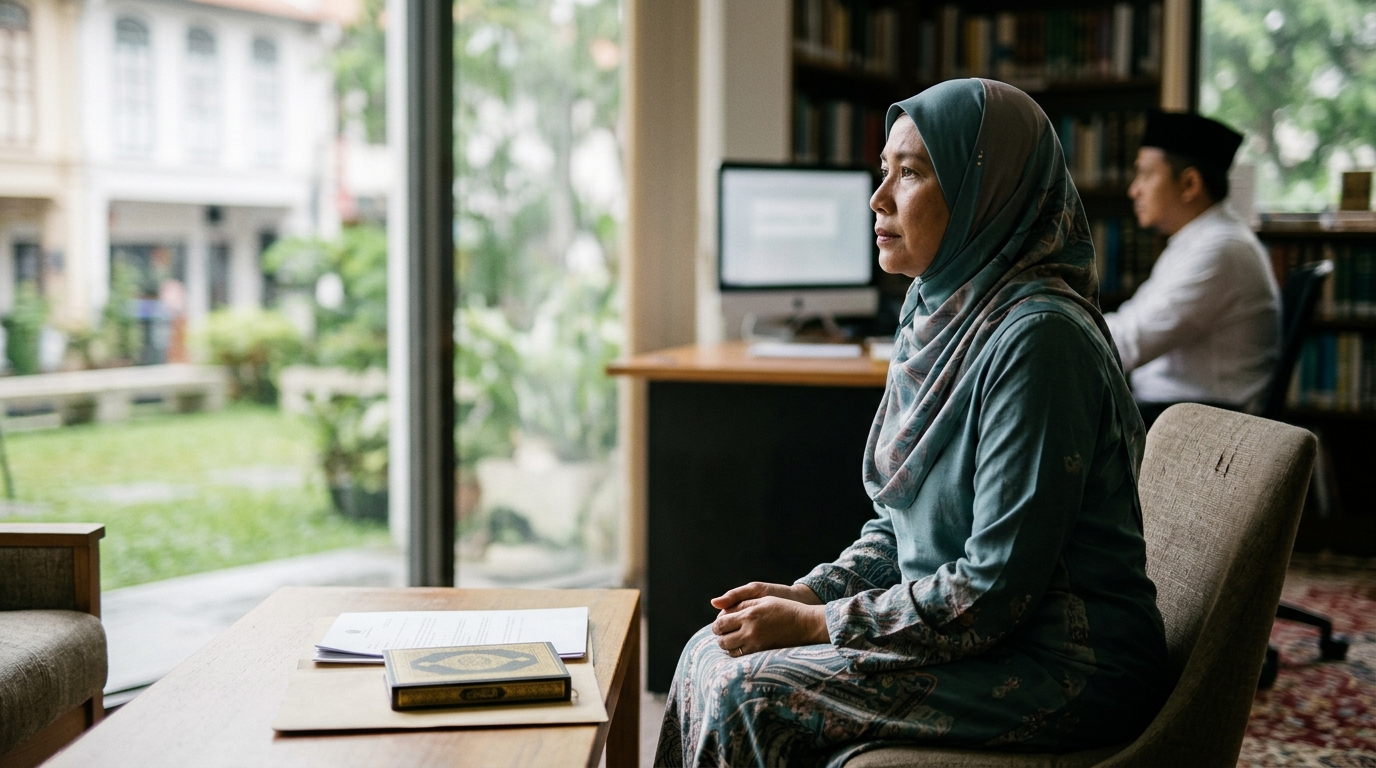
Under Singapore's Syariah law, a Muslim husband or wife can file for divorce at the Syariah Court. The husband may initiate the process through talaq, while the wife may seek a judicial dissolution known as faskh. Both parties must be Muslims and the marriage must be valid under Islamic law to proceed with these specific legal avenues.
Eligibility Requirements for Filing
To file for divorce under Islamic law in Singapore, the applicant must be a Muslim. This requirement is fundamental because the Syariah Court's jurisdiction is limited to Muslim parties. If one spouse is not Muslim, the case must be handled by the Family Justice Courts under civil law instead. The marriage itself must also be recognized as valid under Islamic principles to be processed in the Syariah Court.
Marital Status and Validity
The court will verify that the marriage was conducted according to Islamic rites. A valid marriage is a prerequisite for the Syariah Court to accept a divorce application. If the marriage is deemed invalid, the court may not have the authority to grant a divorce but may address other related matters. This distinction ensures that only appropriate cases are handled under religious law.
Where to File: The Syariah Court
All divorce applications under Islamic law in Singapore must be filed at the Syariah Court. This specialized court handles family matters for Muslims, including divorce, maintenance, and custody. The court is located in Singapore and provides a dedicated forum for resolving these issues according to Islamic jurisprudence. Filing in the correct court is essential to ensure your case is heard by judges with the appropriate expertise.
Procedural Steps for Filing
Applicants typically begin by submitting a written application to the Syariah Court registry. The application must include details of the marriage, the grounds for divorce, and any requests for ancillary matters like maintenance or custody. The court will then issue a summons to the other party, notifying them of the proceedings. Proper documentation and adherence to court rules are critical for a smooth filing process.
Grounds for Divorce: Talaq vs. Faskh
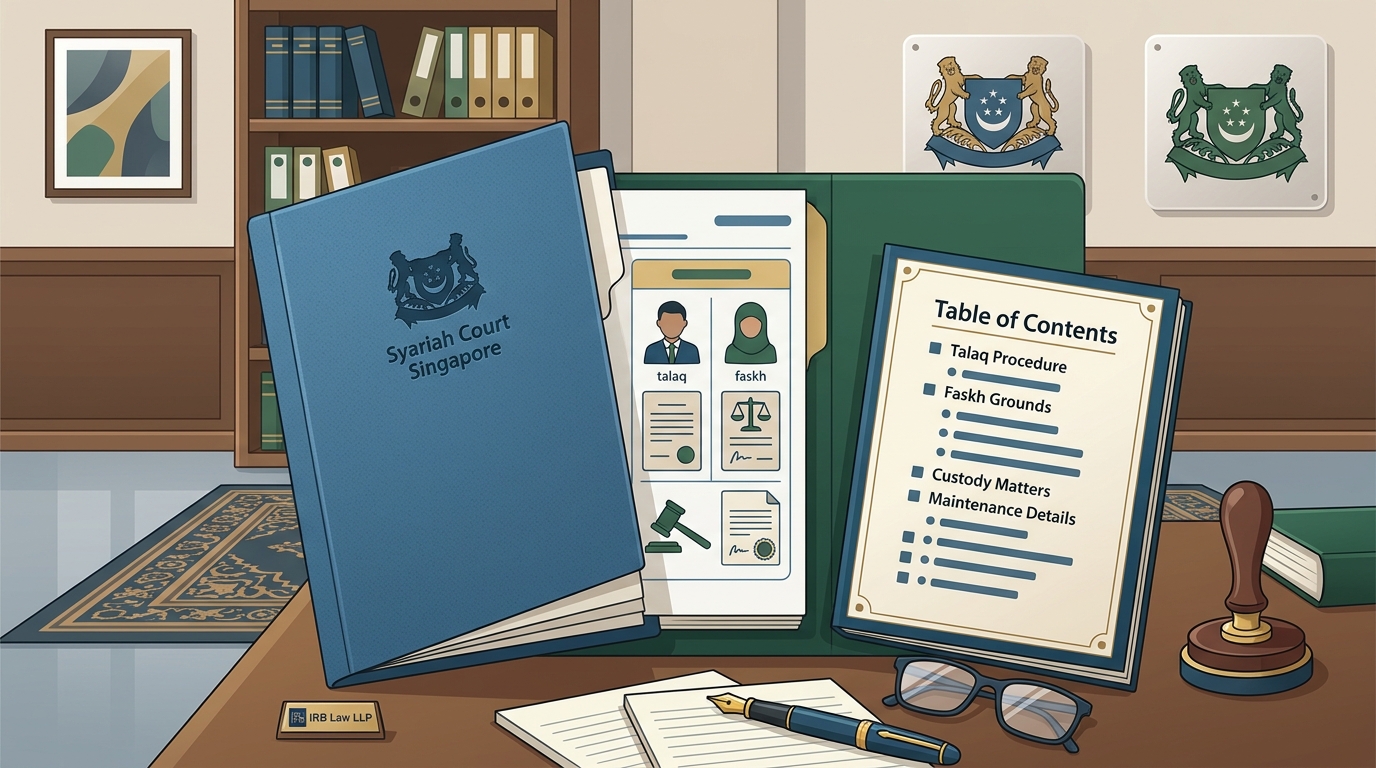
There are two primary ways a divorce can be granted under Islamic law in Singapore: talaq and faskh. Talaq is the right of the husband to pronounce divorce, while faskh is a judicial dissolution sought by the wife. Understanding the difference between these two mechanisms is crucial for applicants to choose the correct legal path. Each has specific requirements and procedures that must be followed.
Talaq: The Husband's Right
Talaq allows a husband to initiate divorce by pronouncing it in the presence of witnesses. In Singapore, the husband must notify the Syariah Court of his intention to divorce. The court will then assess the situation and ensure that the wife is informed of her rights, including maintenance and custody. This process provides a structured framework for the husband's right to divorce while protecting the wife's interests.
Faskh: The Wife's Judicial Dissolution
Faskh is a divorce granted by the court at the wife's request. The wife must demonstrate specific grounds, such as the husband's failure to provide maintenance, his absence, or his misconduct. The court will evaluate the evidence and decide whether to grant the divorce. This mechanism ensures that women have a legal avenue to seek divorce when their marriage becomes untenable, providing a balance of rights within the Islamic legal framework.
Practical Considerations for Applicants
Applicants should be aware of the practical aspects of filing for divorce under Islamic law. This includes understanding the timeline, the costs involved, and the potential outcomes. Seeking legal advice can help navigate these complexities and ensure that your rights are protected. A lawyer can assist in preparing the necessary documents and representing you in court, increasing the likelihood of a favorable outcome.
Legal Representation and Support
While it is possible to file without a lawyer, having legal representation is highly recommended. A lawyer experienced in Syariah law can provide guidance on the best strategy for your case. They can help you understand the implications of your decisions and advocate for your interests in court. IRB Law LLP offers specialized services in Syariah law, providing expert advice and representation for divorce cases in Singapore.
Key Takeaways
- Only Muslim spouses can file for divorce under Islamic law in Singapore.
- The Syariah Court is the exclusive venue for filing divorce applications under Islamic law.
- Husbands may initiate divorce through talaq, while wives may seek judicial dissolution through faskh.
- The marriage must be valid under Islamic principles to be processed in the Syariah Court.
- Legal representation is recommended to navigate the complexities of Syariah law and protect your rights.
- Proper documentation and adherence to court rules are essential for a successful filing.
Frequently Asked Questions
Can a non-Muslim spouse file for divorce in the Syariah Court?
No, the Syariah Court only handles cases where both parties are Muslim. If one spouse is not Muslim, the divorce must be filed in the Family Justice Courts under civil law.
What is the difference between talaq and faskh?
Talaq is the right of the husband to pronounce divorce, while faskh is a judicial dissolution sought by the wife. Talaq is initiated by the husband, whereas faskh requires a court order based on specific grounds.
Where do I file for divorce under Islamic law in Singapore?
You must file at the Syariah Court. This specialized court handles all family matters for Muslims, including divorce, maintenance, and custody.
Do I need a lawyer to file for divorce in the Syariah Court?
While not mandatory, having a lawyer is highly recommended. A lawyer can provide guidance on the legal process, help prepare documents, and represent you in court.
What are the grounds for faskh?
Grounds for faskh include the husband's failure to provide maintenance, his absence, or his misconduct. The court will evaluate the evidence to determine whether to grant the divorce.
How long does the divorce process take in the Syariah Court?
The timeline can vary depending on the complexity of the case and the cooperation of the parties. It is advisable to consult with a lawyer for a more accurate estimate based on your specific circumstances.
Conclusion
Filing for divorce under Islamic law in Singapore requires understanding the eligibility requirements, the correct venue, and the available legal mechanisms. The Syariah Court is the exclusive forum for these cases, and applicants must be Muslim with a valid marriage. Seeking professional legal advice can help navigate this process effectively. IRB Law LLP provides expert guidance and representation for Syariah law matters, ensuring that your rights are protected throughout the divorce process.