

Estates in Singapore are increasingly complex, with over 40,000 deaths recorded annually in recent years, creating a significant demand for professional legal administration. According to recent demographic data, the average estate value in Singapore has risen substantially, making the correct application of probate laws critical for asset protection. Navigating the Singapore legal system without expert guidance often leads to delays, financial penalties, and family disputes that could have been avoided.
Understanding the Core Difference
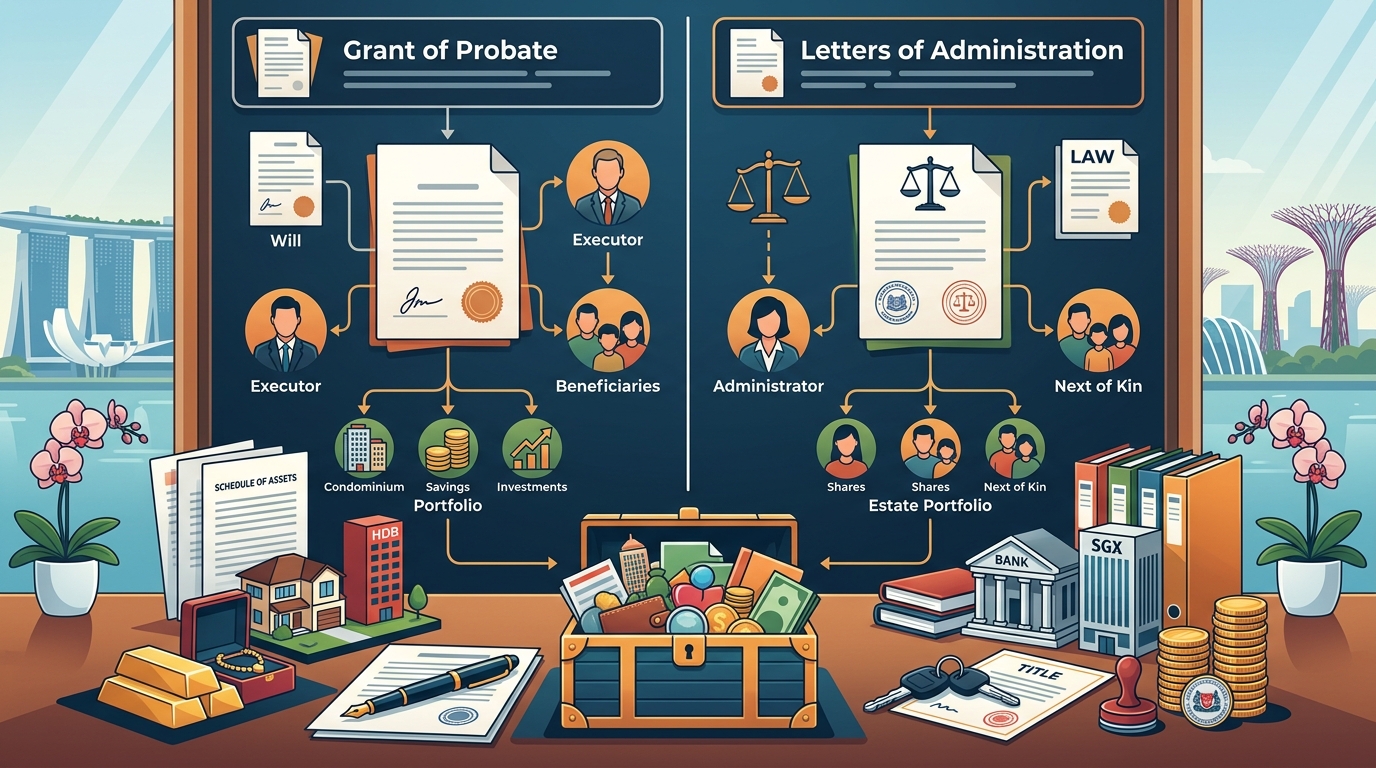
The primary distinction between these two legal instruments lies in the existence of a valid will. Grant of Probate is issued when the deceased left a valid will and appointed executors to manage their estate. In contrast, Letters of Administration are granted when there is no valid will, or the will fails to appoint executors, requiring the court to appoint administrators.
Probate is a legal document that confirms the validity of the will and empowers the named executors to distribute the assets. Letters of Administration serve a similar function but are granted to administrators who are usually close relatives of the deceased. Both documents are essential for dealing with banks, property boards, and investment firms in Singapore.
At IRB Law LLP, we specialize in guiding families through these complex legal landscapes with precision and empathy. Our team understands that trust is built case by case, and we are committed to providing unwavering advocacy for every client we represent.
Applying for a Grant of Probate
Applying for a Grant of Probate is the standard procedure when a valid will exists. The process is governed by the Probate and Administration Act 1965. The executors named in the will must apply to the High Court of Singapore to have the will validated.
Eligibility and Requirements
To apply for probate, the executors must ensure the will is valid and original. The application requires a detailed inventory of the deceased's assets and liabilities. This includes bank accounts, real estate properties, shares, and personal belongings. The court needs to verify that the total value of the estate exceeds the threshold for probate filing.
According to legal standards, the estate must be valued accurately to determine the appropriate court fees. If the estate includes immovable property in Singapore, the application must be filed in the High Court. The executors must also provide a declaration that they will administer the estate according to the law and the will's instructions.
The Application Process
The process begins with the preparation of the necessary documents, including the will, the death certificate, and the affidavit of executors. These documents are then submitted to the State Courts or the High Court, depending on the estate's value. The court will review the documents and, if satisfied, issue the Grant of Probate.
Once the grant is issued, the executors can proceed to collect the assets, pay off debts, and distribute the remaining estate to the beneficiaries. This process can take several months, especially if the estate is complex or if there are disputes among beneficiaries. For expert assistance, you can explore our Probate & Letters of Administration Services to ensure a smooth transition.
Applying for Letters of Administration
When a person dies intestate, meaning without a valid will, the court grants Letters of Administration to eligible relatives. This process is more stringent because the court must determine who is entitled to administer the estate based on a hierarchy of relatives.
Who Can Apply?
The hierarchy for applying for Letters of Administration typically starts with the surviving spouse or children. If there are no surviving spouses or children, the parents may apply. If the parents are deceased, siblings or other relatives may be considered. The court prioritizes those who have a direct financial interest in the estate.
In some cases, creditors may also apply for Letters of Administration if the estate is insolvent. This ensures that the debts are paid before any distribution to relatives. The process requires the applicant to provide a detailed inventory of the estate and a surety bond to protect the beneficiaries.
Legal Implications
Letters of Administration are not just a formality. They grant the administrator the legal authority to deal with the deceased's assets. Without this grant, banks and other institutions will not release funds or transfer property. The administrator must act in the best interest of all beneficiaries and follow the Intestate Succession Act.
For Muslim estates, the process is different and governed by Syariah law. If you are dealing with a Muslim estate, you should consult our Faraid – Muslim Inheritance services for specialized guidance.
Key Differences at a Glance
Understanding the nuances between Probate and Letters of Administration is crucial for efficient estate administration. The following table summarizes the key differences.
| Feature | Grant of Probate | Letters of Administration |
|---|---|---|
| Valid Will | Yes | No |
| Appointed Person | Executors named in the will | Administrators appointed by the court |
| Legal Basis | Probate and Administration Act | Intestate Succession Act |
| Application Priority | As per will | Strict hierarchy of relatives |
| Surety Bond | Usually not required | Often required |
Both processes require meticulous attention to detail. Errors in the application can lead to significant delays and additional legal costs. Our team at IRB Law LLP provides comprehensive support to navigate these requirements effectively.
Key Takeaways
- Grant of Probate is required when a valid will exists and named executors are willing to act.
- Letters of Administration are necessary for intestate estates, following a strict hierarchy of relatives.
- The Probate and Administration Act 1965 governs the legal framework for both processes in Singapore.
- Both grants are essential for accessing bank accounts, selling property, and distributing assets.
- IRB Law LLP has over a decade of experience in handling complex probate and administration cases.
- Failure to obtain the correct grant can result in legal liability for the person handling the assets.
- Our firm offers a dedicated Estate Planning service to prevent such issues.
Frequently Asked Questions
What is the difference between a Grant of Probate and Letters of Administration?
A Grant of Probate is issued when there is a valid will, while Letters of Administration are issued when there is no will. The former empowers executors, while the latter empowers administrators.
How long does it take to get a Grant of Probate in Singapore?
The process typically takes between 3 to 6 months, depending on the complexity of the estate and the court's workload. Delays can occur if documents are incomplete or if there are disputes.
Can I apply for Letters of Administration if I am not a relative?
Generally, no. The court prioritizes close relatives. However, in exceptional circumstances, a creditor or another interested party may apply if no relatives are available.
What happens if the will does not name an executor?
If the will does not name an executor, or the named executor is unwilling or unable to act, the court may grant Letters of Administration with the will annexed to a suitable beneficiary.
Do I need a lawyer to apply for Probate?
While it is possible to apply without a lawyer, the process is legally complex. It is highly recommended to seek professional assistance to avoid errors that could lead to personal liability.
What is the cost of applying for Probate?
The cost includes court fees based on the estate value and legal fees. Our Will Writing services can help you plan ahead to minimize these costs.
Can a foreigner apply for Probate in Singapore?
Yes, a foreigner can apply if they are named as an executor in a valid will or are a close relative in an intestate estate. However, they may need to provide a local surety.
Contact IRB Law LLP
Navigating the complexities of estate administration requires expertise and care. At IRB Law LLP, we provide trusted legal partners for life. Our team is dedicated to helping you secure your legacy and protect your family's future.
For professional assistance with your estate planning needs, please contact us today or call us at +65 6298 2537. Let us help you navigate this difficult time with confidence and clarity.