

Probate is the legal document that confirms a will is valid and grants executors the authority to manage the estate. Letters of Administration serve a similar function but are issued when a person dies without a will. In Singapore, navigating these processes is critical for ensuring assets are distributed according to law or the deceased's wishes. The legal landscape for estate administration is rigorous, requiring strict adherence to the Supreme Court Practice Directions and the Probate and Administration Act. (Cross Border Money Transfers)
Understanding the Basics of Estate Administration
When a person passes away in Singapore, their estate does not automatically transfer to their beneficiaries. The Supreme Court of Singapore must issue a formal grant to authorize anyone to administer the assets. This grant acts as proof of authority for banks, investment firms, and land registries to release funds or transfer property titles.
There are two primary types of grants. Grant of Probate is issued when the deceased left a valid will. Letters of Administration are issued when there is no will, or the will is invalid. Both processes require the applicant to prove their entitlement and ensure all debts and taxes are settled before distribution.
For many families, the emotional burden of loss is compounded by complex legal requirements. IRB Law LLP provides dedicated support to navigate these procedures with precision and care. Our team ensures that every document is filed correctly to avoid delays in asset release.
Applying for a Grant of Probate
A Grant of Probate is the cornerstone of estate administration when a valid will exists. The will must name executors who are willing and able to act. If the will does not name an executor, or if the named executor is unable to act, the court may appoint an administrator with the will annexed.
The validity of the will is paramount. The document must be signed by the testator in the presence of two witnesses who are present at the same time. If the will is flawed, the estate may be treated as intestate, triggering the Letters of Administration process under the Intestate Succession Act.
Executors must file an Originating Summons in the High Court. This legal document outlines the details of the deceased, the beneficiaries, and the assets. The court will review the application to ensure there are no disputes among beneficiaries. If all parties agree, the process is streamlined. However, any disagreement can lead to litigation, significantly extending the timeline.
IRB Law LLP specializes in will drafting and review to prevent such issues. Our legal insights provide further guidance on proactive estate planning. We help clients structure their wills to minimize ambiguity and ensure their wishes are respected.
Applying for Letters of Administration
Letters of Administration are required when a person dies intestate, meaning without a valid will. In this scenario, the Intestate Succession Act dictates how the estate is distributed among surviving spouses, children, parents, or siblings. The court appoints an administrator, usually a close relative, to manage the estate.
The hierarchy of entitlement for administrators is strict. The surviving spouse or child typically has the first right to apply. If they are unwilling or unable to act, the right may pass to parents or siblings. The court must be satisfied that the applicant is suitable and has no conflicts of interest.
Applicants must file a Notice of Intention to Apply for Letters of Administration. This notice is published to alert any potential creditors or other entitled parties. If no objections are raised within the specified period, the applicant can proceed to file the Originating Summons.
For those facing complex family dynamics or cross-border assets, professional legal assistance is invaluable. IRB Law LLP offers expert probate and administration services to guide families through this intricate process. We ensure compliance with all statutory requirements.
Key Differences and Eligibility
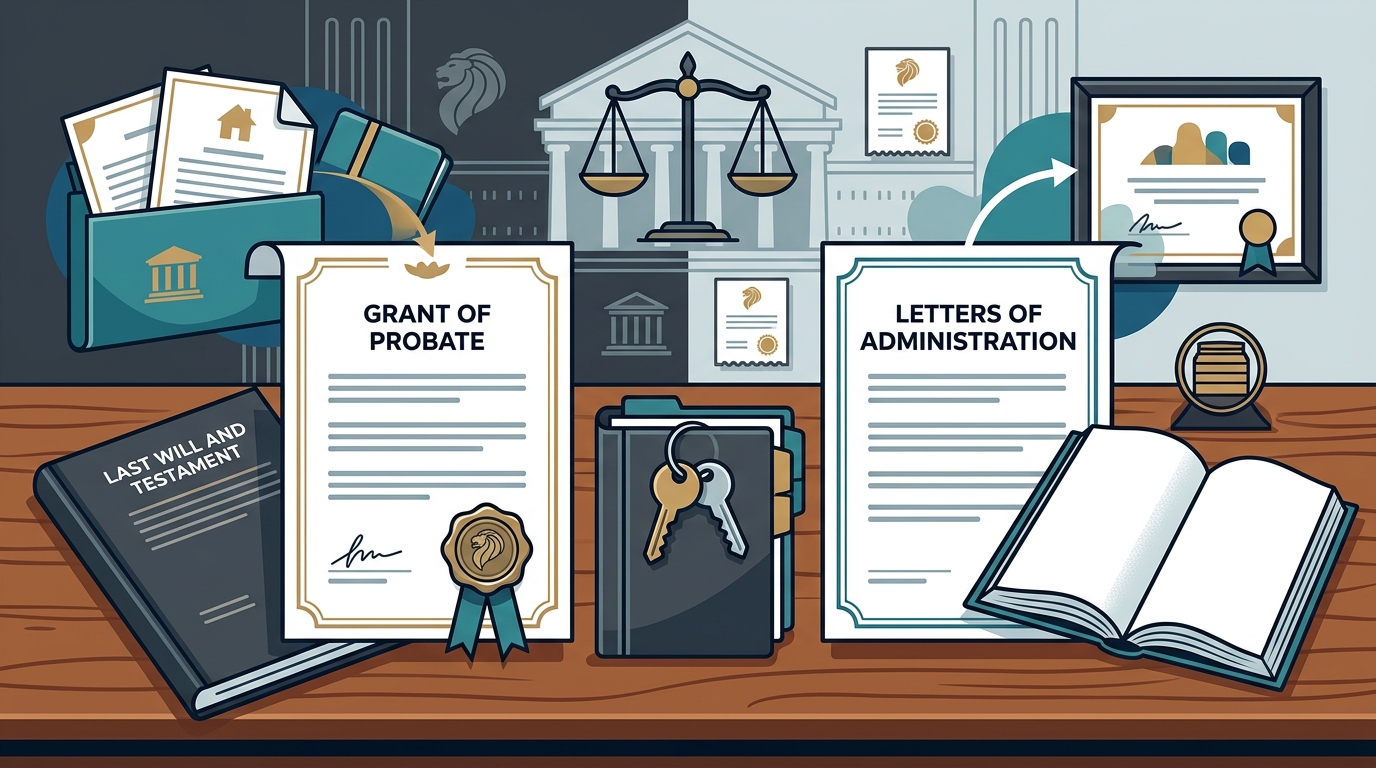
Understanding the distinction between Probate and Letters of Administration is crucial for determining the correct legal path. The primary difference lies in the existence of a valid will. Probate validates the will and empowers the executors named within it. Letters of Administration appoint an administrator based on statutory rules of intestacy.
Eligibility criteria also differ. For Probate, the executor must be named in the will and must accept the role. For Letters of Administration, the applicant must prove their relationship to the deceased and their entitlement under the Intestate Succession Act. The court has discretion to reject applicants who are deemed unfit or who have conflicting interests.
Another key difference is the speed of the process. Probate can sometimes be faster if the will is clear and all beneficiaries are in agreement. Letters of Administration may take longer due to the need to identify all entitled parties and resolve potential disputes among them.
IRB Law LLP provides comprehensive estate planning services to help clients avoid intestacy. By creating a robust will, individuals can ensure their assets are distributed according to their wishes, rather than default statutory rules.
The Step-by-Step Application Process
The application process for both grants involves several critical steps. First, the applicant must gather all necessary documents, including the death certificate, the will (if applicable), and asset valuations. Accurate valuation is essential for calculating stamp duty and legal fees.
Next, the applicant must file an Originating Summons in the High Court. This document must include a list of assets and liabilities, as well as the details of all beneficiaries. The court will review the application for completeness and accuracy. Any errors can lead to delays or rejection.
Once the summons is filed, the court will issue a hearing date. The applicant must attend the hearing to present the case. If the court is satisfied, it will issue the grant. The grant must then be lodged with relevant institutions, such as banks and the Land Authority, to access the assets.
For those dealing with probate and letters of administration, IRB Law LLP offers end-to-end support. We handle the documentation, court filings, and communication with institutions, allowing families to focus on healing.
Common Challenges and Legal Pitfalls
One of the most common challenges in estate administration is the discovery of unknown assets or debts. If assets are not fully disclosed, the grant may be challenged, and the administrator could be held personally liable. It is crucial to conduct a thorough search of all financial records.
Another significant pitfall is family disputes. Disagreements among beneficiaries can lead to litigation, which can drain the estate's value and delay distribution for years. Clear communication and professional mediation are essential to resolve conflicts early.
Cross-border assets add another layer of complexity. If the deceased owned property or accounts in other jurisdictions, additional legal processes may be required. IRB Law LLP has a global reach and expertise to handle international estate matters efficiently.
For those concerned about cross-border money transfers and asset protection, our team provides strategic advice to safeguard wealth across borders. We ensure compliance with international regulations and tax laws.
Key Takeaways
- Grant of Probate is required when a valid will exists, validating the executors' authority.
- Letters of Administration are issued for intestate estates, following the Intestate Succession Act.
- Eligibility for Probate depends on being named in the will, while Administration depends on statutory hierarchy.
- Documentation must be accurate, including death certificates and asset valuations, to avoid court delays.
- Family Disputes can significantly prolong the process and reduce the estate's value through legal costs.
- IRB Law LLP offers specialized estate planning and administration services.
- Proactive Planning through wills and trusts can prevent intestacy and reduce administrative burdens.
Frequently Asked Questions
What is the difference between Probate and Letters of Administration?
Probate is granted when a valid will exists, confirming the executors' authority. Letters of Administration are granted when there is no will, appointing an administrator based on statutory rules.
How long does it take to get a Grant of Probate in Singapore?
The process typically takes 4 to 8 weeks if there are no complications or disputes. Complex estates or litigation can extend this timeline significantly.
Can I apply for Letters of Administration if I am not a close relative?
Generally, the court prefers close relatives. However, in exceptional circumstances, the court may appoint another person if it is in the best interest of the estate.
What happens if there is a dispute among beneficiaries?
Disputes can lead to litigation, which may delay the grant and reduce the estate's value. Mediation or legal intervention is often required to resolve conflicts.
Do I need a lawyer to apply for Probate or Letters of Administration?
While it is possible to apply without a lawyer, the process is complex and error-prone. Professional legal assistance is highly recommended to ensure compliance and efficiency.
What documents are required for the application?
Required documents include the death certificate, the original will (if applicable), asset valuations, and identity documents of the applicant and beneficiaries.
How does IRB Law LLP assist with estate administration?
IRB Law LLP provides comprehensive legal support, including document preparation, court filings, and dispute resolution, ensuring a smooth administration process.
What is the role of the Supreme Court in estate administration?
The Supreme Court oversees the grant process, ensuring legal compliance and fairness. It issues the grant and resolves any disputes that arise during administration.
Contact IRB Law LLP
Navigating the complexities of estate administration requires expertise and precision. IRB Law LLP is committed to providing trusted legal partners for life. Our team of dedicated lawyers is ready to assist you with your probate or administration needs.
Do not let legal uncertainties add to your burden. Contact us today to schedule a consultation. We offer flexible appointment times to accommodate your schedule. Visit our contact page to get in touch with our experienced team.