
Understanding the intersection of faith and law is critical for Singapore's Muslim community. The Administration of Muslim Law Act (AMLA) governs these matters, ensuring that religious principles are applied within the national legal framework. Recent data indicates that the Syariah Court handles thousands of cases annually, reflecting the high volume of family and estate disputes in the region. Navigating these processes without professional guidance can lead to significant legal complications and emotional distress. This guide outlines the precise mechanisms for Syariah divorce and Faraid inheritance, providing clarity on rights, obligations, and procedural requirements. (Cross Border Money Transfers)
What is Syariah Law in Singapore?
Syariah law is the body of religious law that forms part of the Islamic faith. In Singapore, it specifically governs personal law matters for Muslims, including marriage, divorce, and inheritance. The administration of these laws is overseen by the Syariah Court and the Majlis Ugama Islam Singapura (MUIS). (Meet Our Lawyers and)
Unlike civil law, which applies to the general population, Syariah law applies exclusively to Muslims. It is codified primarily through the Administration of Muslim Law Act (AMLA). This act provides the statutory basis for the Syariah Court's jurisdiction. It ensures that religious rulings are enforceable under Singaporean law. The system aims to balance religious fidelity with modern legal standards.
For many Muslims, compliance with Syariah law is not just a legal requirement but a spiritual obligation. The court system provides a structured environment for resolving disputes in accordance with Islamic principles. This dual-layered approach ensures that religious sentiments are respected while maintaining social order.
The Syariah Divorce Process Explained
Divorce in Singapore for Muslims is processed through the Syariah Court. The process differs significantly from civil divorce under the Women's Charter. Understanding the specific grounds and procedures is essential for a smooth resolution.
Grounds for Divorce
The primary ground for divorce is fasakh, which refers to a judicial dissolution of marriage. A wife may file for fasakh on specific grounds, such as the husband's failure to provide maintenance or his desertion. The husband may also seek divorce through talaq, which is a unilateral repudiation. However, talaq must be registered with the Syariah Court to be legally valid.
Other grounds include irretrievable breakdown of the marriage. This is determined by factors such as adultery, cruelty, or unreasonable behavior. The court must be satisfied that the marriage has broken down beyond repair. Mediation is often encouraged to explore reconciliation options.
Procedural Steps
The process begins with the filing of an application at the Syariah Court. For talaq, the husband must submit a notice of divorce. For fasakh, the wife must provide evidence supporting her claims. The court will then schedule a hearing to review the case.
During the hearing, both parties may present their arguments. The judge will examine the evidence and apply relevant Islamic legal principles. If the divorce is granted, the court will issue a decree. This decree must be registered to take effect. The cooling-off period allows for potential reconciliation efforts.
Post-divorce, matters such as custody, maintenance, and asset division are addressed. The court prioritizes the welfare of the children. Custody decisions are made based on the best interests of the child. Maintenance obligations continue until the child reaches a certain age or completes education.
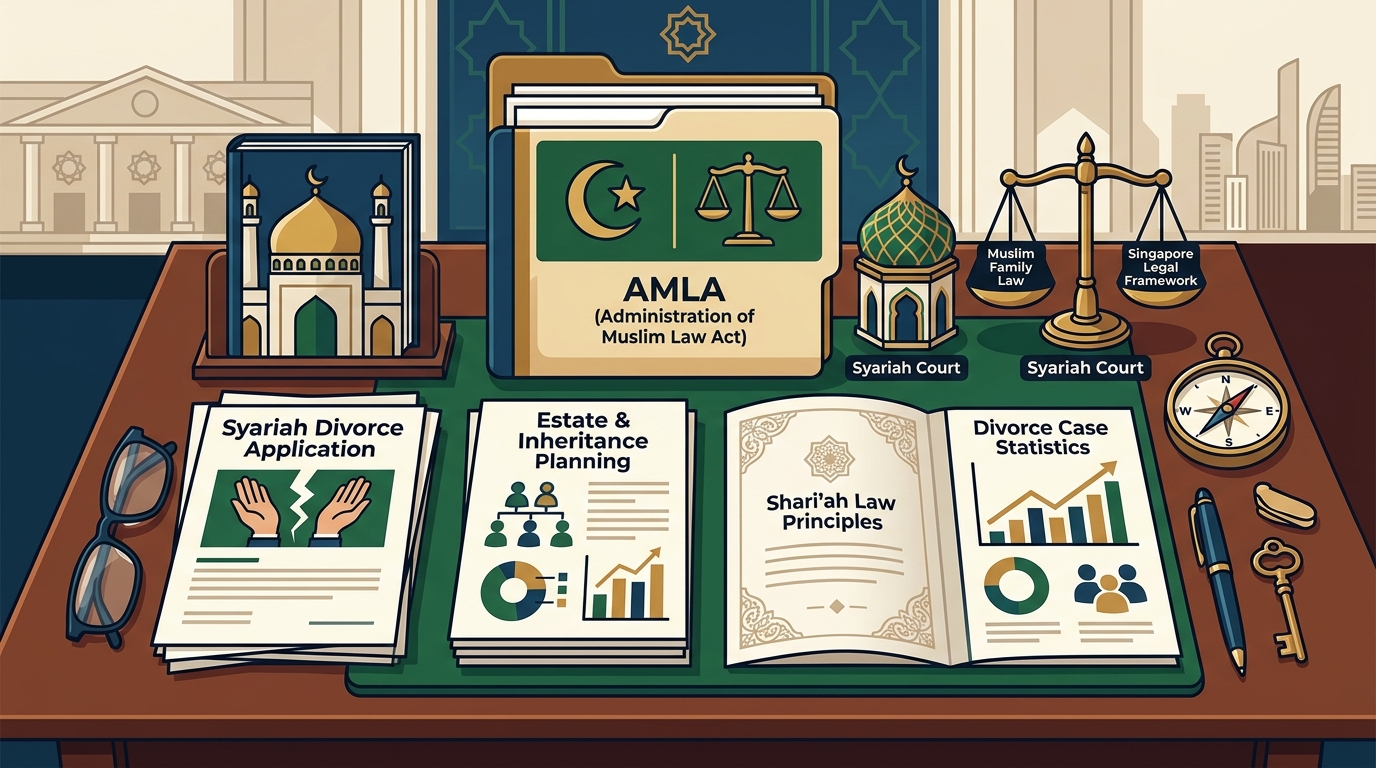
Understanding Faraid Inheritance Distribution
Faraid is the Islamic law of inheritance. It dictates how the estate of a deceased Muslim is distributed among heirs. The distribution is fixed by the Quran and cannot be altered by the deceased's wishes, except for a portion that can be disposed of via Wasiat.
Key Heirs and Shares
Heirs are categorized into primary and secondary groups. Primary heirs include spouses, parents, and children. Their shares are specified in the Quran. For example, a husband typically receives one-eighth of the estate if the deceased has children. A wife receives one-sixth under similar circumstances.
Children play a crucial role in inheritance. Sons generally receive twice the share of daughters. This reflects traditional Islamic economic responsibilities. However, the distribution can vary based on the presence of other heirs. The court calculates the exact shares using Faraid tables.
Role of the Syariah Court
The Syariah Court oversees the distribution of the estate. A Grant of Probate or Letter of Administration is required. This legal document authorizes the executor to distribute assets. The court ensures that the distribution complies with Faraid rules.
Disputes among heirs are common. The court provides a mechanism for resolution. Mediation is often used to settle disagreements. If mediation fails, the court makes a binding decision. This ensures that the estate is distributed fairly and according to religious law.
Wasiat and Hibbah: Alternative Dispositions
While Faraid governs the majority of the estate, Muslims have limited flexibility in disposing of their assets. Two key mechanisms allow for this: Wasiat and Hibbah.
Wasiat (Will)
Wasiat allows a Muslim to bequeath up to one-third of their estate to non-heirs or charitable causes. This portion is flexible and can be used for specific purposes. The remaining two-thirds must be distributed according to Faraid.
A Wasiat must be executed in accordance with legal formalities. It should be witnessed and registered. The Syariah Court validates the Wasiat to ensure it does not contradict Faraid principles. This mechanism is useful for supporting non-Muslim family members or charities.
Hibbah (Gift)
Hibbah refers to the inter vivos gift. It allows a Muslim to transfer assets during their lifetime. This can be used to provide for specific individuals or causes. However, Hibbah must be genuine and not intended to defraud heirs.
The transfer of assets via Hibbah must be documented. The court may scrutinize large gifts to ensure they are not attempts to bypass Faraid. Proper documentation and registration are essential to validate the gift. This provides a legal framework for asset planning.
Key Takeaways
- Syariah law in Singapore is governed by the Administration of Muslim Law Act (AMLA) and administered by the Syariah Court.
- Divorce can be initiated via talaq by the husband or fasakh by the wife, requiring court registration for legal validity.
- Faraid dictates fixed inheritance shares for heirs, with sons typically receiving double the share of daughters.
- Up to one-third of an estate can be disposed of via Wasiat (will) to non-heirs or charities.
- Hibbah allows for lifetime gifting of assets but must be genuine and properly documented to avoid legal challenges.
- The Syariah Court plays a central role in validating wills, granting probate, and resolving inheritance disputes.
- Mediation is encouraged in both divorce and inheritance cases to promote amicable resolutions.
Frequently Asked Questions
Can a Muslim in Singapore choose to follow civil law for divorce?
No, Muslims in Singapore are required to follow Syariah law for marriage, divorce, and inheritance matters. Civil law does not apply to these personal status issues for Muslims.
What is the difference between talaq and fasakh?
Talaq is a unilateral divorce initiated by the husband. Fasakh is a judicial divorce initiated by the wife on specific grounds such as desertion or failure to provide maintenance.
How is Faraid calculated?
Faraid is calculated using fixed shares prescribed in the Quran. The Syariah Court uses standard tables to determine the exact portion each heir receives based on the surviving family members.
Can I leave my entire estate to my children via a will?
No, you can only bequeath up to one-third of your estate via Wasiat. The remaining two-thirds must be distributed according to Faraid rules to the statutory heirs.
What happens if there is a dispute over inheritance?
Disputes are resolved through the Syariah Court. The court may order mediation or make a binding decision based on Islamic legal principles and evidence.
Is Hibbah taxable in Singapore?
Singapore does not have inheritance tax or gift tax. However, proper documentation is required to prove the nature of the transfer and avoid legal challenges from other heirs.
Do I need a lawyer for Syariah divorce?
While not mandatory, legal representation is highly recommended. Lawyers can ensure that procedures are followed correctly and that your rights are protected throughout the process.
Contact IRB Law LLP for Expert Syariah Legal Advice
Navigating Syariah divorce and inheritance requires precision and deep legal knowledge. IRB Law LLP provides specialized counsel for Muslim families in Singapore. Our team understands the nuances of Faraid, Wasiat, and Syariah procedure. We offer compassionate and professional support to protect your interests and ensure compliance with religious and legal standards.
Do not leave your family's future to chance. Contact us today to schedule a consultation. Visit our Contact Us page to get in touch with our experienced lawyers. We are here to help you navigate these complex matters with confidence and clarity.